

Demand for Homecare Medical Devices in the USA (2025-2035)
Overview of the Market
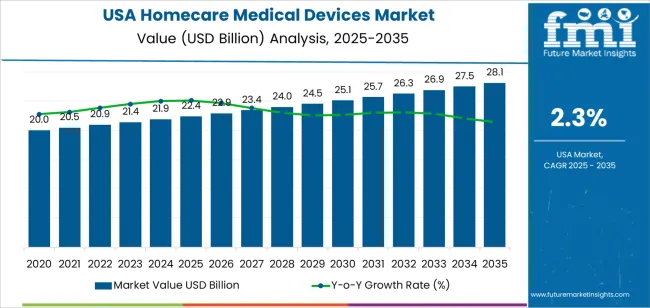
The demand for homecare medical devices in the USA is projected to grow from USD 22.4 billion in 2025 to USD 28.2 billion by 2035, at a steady CAGR of 2.3%. This growth is driven by an ever-increasing reliance on in-home therapeutic equipment, mobility assistance devices, and respiratory-care systems, as healthcare delivery models gradually transition towards outpatient and home-based management. As the population ages and chronic respiratory conditions rise, there is a notable emphasis on patient autonomy, reinforcing a steady long-term consumption of home-use devices. Moreover, procurement by home-health agencies and durable medical equipment providers remains robust, ensuring a steady supply of mobility aids, oxygen concentrators, and rehabilitation equipment.
Leading Product Segment: Wheelchairs
Wheelchairs dominate the homecare medical device market, representing the largest product category. Their continued reliance, whether for manual or powered mobility solutions, spans rehabilitation, postoperative recovery, and elderly care. The regular use of wheelchairs means that there’s a strong baseline for annual device replacement and service cycles, ensuring their consistent presence in both institutional and home environments.
Key Stats for Homecare Medical Devices in the USA
- Sales Value in 2025: USD 22.4 billion
- Forecast Value in 2035: USD 28.2 billion
- CAGR (2025-2035): 2.3%
- Leading Product: Wheelchairs
- Growth Regions: West, South, Northeast
- Major Players: AirSep, SeQual, Drive Medical, Graham-Field, Inogen, Invacare
Regional Demand Dynamics
The demand for homecare medical devices is particularly strong in the West, South, and Northeast regions of the USA, attributed to their large aging populations and established medical-equipment distribution channels. These areas are also home to significant healthcare facilities and service providers which facilitate continuous device deployment and maintenance, enhancing patient-care engagement.
Highlighted Growth Forecast
- West Region: 2.8% CAGR
- South Region: 2.5% CAGR
- Northeast Region: 2.1% CAGR
- Midwest Region: 1.8% CAGR
Drivers of Growth in Demand
Several factors contribute to the increasing demand for homecare medical devices in the USA:
-
Aging Population: As the baby boomer generation ages, there is a growing need for devices that assist with mobility, monitoring, and therapeutic care at home.
-
Chronic Disease Prevalence: Rising numbers of conditions such as diabetes, respiratory disorders, and cardiovascular diseases increase the necessity for home monitoring and therapy.
-
Shift to Home-Based Care: Healthcare providers are moving towards more outpatient and home-based solutions, promoting devices that can be used comfortably within a patient’s home.
-
Technological Advancements: Innovations in device connectivity, remote monitoring capabilities, and more compact designs make these products more accessible and user-friendly.
While these drivers enhance market growth, challenges do exist, including potential barriers related to the cost of devices, complexities around reimbursement, and the need for proper user training.
Product Segmentation
Wheelchairs: The Mainstay
Wheelchairs constitute a staggering 57.4% of national demand, reflecting their fundamental role in mobility for various users, including those with disabilities or chronic conditions.
Oxygen Treatment Devices
Oxygen treatment devices account for 9.0% of market demand, indicating the heightened need for respiratory support among patients managing chronic respiratory disorders.
Accessibility Equipment
Accessibility beds and toilets represent another 19.0% combined, catering to individuals with limited mobility, while specialized lifts and scooters comprise 11.0% for those needing enhanced mobility assistance.
Distribution Channels
Online Retailers Leading the Charge
Online retailers hold a significant 39.5% market share of the national demand for homecare medical devices, proving how digital shopping has provided patients and caregivers with increased access to necessary medical products. Pharmacies make up 39.0%, acting as crucial points for consumers needing guidance on device selection.
Retail Medical Stores
Retail medical stores account for 21.5%, offering a space where users can physically see and, in some cases, try the devices, ensuring they’re suited to individual needs before purchase.
Regional Insights: The West Leading the Way
The West region increases its demand at the highest CAGR of 2.8%, supported by a well-developed healthcare network that integrates home-monitoring and telehealth solutions. Families frequently rely on home-care support for long-term management, facilitated by robust pharmacy chains and medical-supply distributors that maintain high availability of products.
The South’s Steady Demand
Following closely, the South showcases a 2.5% CAGR as more individuals seek home-monitoring devices given rising chronic illness. Home-health agencies actively incorporate portable diagnostic tools in everyday practices, pushing the demand for essential equipment.
Northeast’s Structured Care Programs
In the Northeast, structured chronic-care programs and reliable distribution channels spurred a 2.1% CAGR, while the Midwest lags slightly at 1.8%, reflecting consistent demand tied to essential chronic-care needs and home health utilization.
Competitive Landscape
The homecare medical device market in the USA is dominated by several major players, including:
- AirSep, renowned for its stable oxygen delivery systems.
- SeQual, known for its high-capacity portable oxygen units.
- Drive Medical, offering a diverse range of mobility aids and respiratory devices.
The competition hinges on factors like device stability, battery performance, and user-friendliness, as patients increasingly turn to home-based solutions for managing chronic conditions.
Key Takeaways
The USA’s homecare medical device market is at a pivotal point, shaped by advances in technology, demographic trends, and changing healthcare models. With a clear trajectory of growth, understanding the nuances of product demand, regional variations, and the competitive landscape will be essential for stakeholders aiming to navigate this dynamic industry effectively.