
The Role of Technology in Transforming Elder Care in Singapore
At eldercare facilities and active aging centers throughout Singapore, technology is evolving from a novelty into a vital component of senior living. Far from being merely a trend, innovations in digital tech are reshaping how seniors connect, heal, and embrace the aging process.
Personal Storytelling Through AI
One compelling example can be seen at St Luke’s ElderCare Active Ageing Centre (Care) @ Northshore. Here, 66-year-old Albert Yeo realized his lifelong aspiration of documenting his experiences in a book. Participating in the pilot Golden Memories programme, Mr. Yeo harnessed generative AI to weave together tales from his life, showcasing milestones from his childhood to his love for hiking.
“This is my first time I’ve touched AI, but I feel the AI is helping a lot,” Mr. Yeo shared. He recounted how the AI chatbot prompted him to delve deep into his memories, transforming his reflections into a cohesive narrative. The outcome was a 45-page book that he proudly printed and distributed to family and friends, many of whom eagerly requested their own copies. The project not only fostered creativity but also allowed for connection and nostalgia.
Preparing for a Super-Aged Society
As Singapore approaches its goal of becoming a “super-aged” society—where over one in five residents is projected to be aged 65 and above by 2026—the need for innovative solutions in eldercare is more pressing than ever. Technology is stepping up to the plate, offering relief for providers and supporting the growing number of seniors living alone.
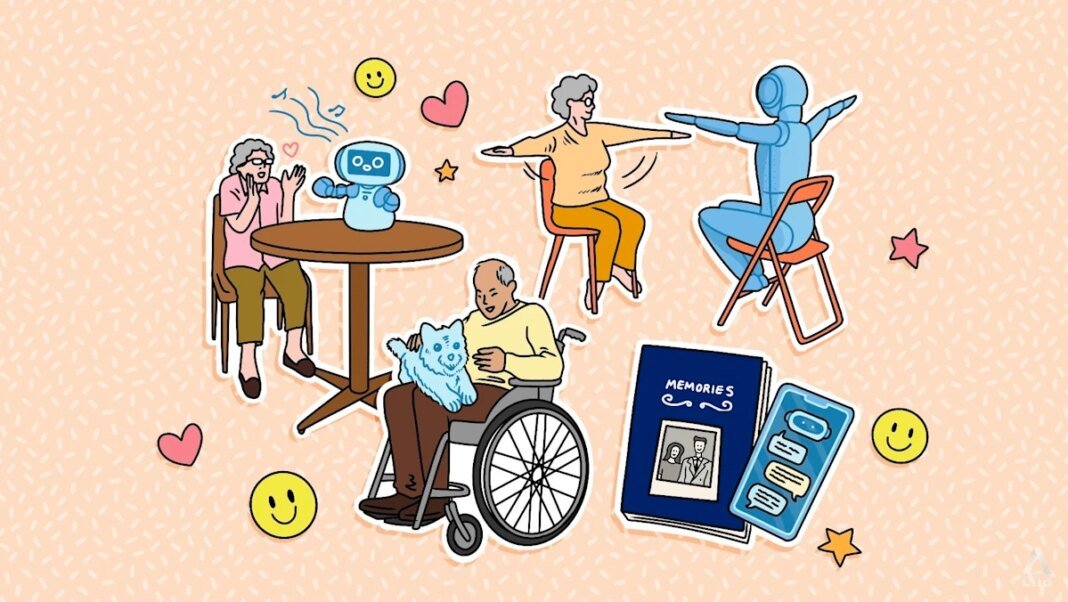
Machines increasingly play roles in facilitating group activities, providing companionship, and even monitoring residents’ health and emotional well-being. This holistic approach is crucial, especially as the number of elderly individuals opting to age in place rises.
Addressing Manpower Challenges
Dr. Kelvin Tan, head of the minor in Applied Ageing Studies at the Singapore University of Social Sciences (SUSS), emphasizes the need to embrace technology as a complement to human care. “One of the challenges we face is a lack of manpower to support our ageing population,” he noted. Dr. Tan advocates for the integration of AI within healthcare settings, suggesting that it can significantly alleviate caregiver burnout and anxiety while enhancing the quality of care.
Innovations in HealthTech
At the national level, HealthTech agency Synapxe is already making strides in this realm. They utilize AI and machine learning to improve healthcare delivery and accessibility, focusing on enhancing patient outcomes. Their HealthHub AI project features a multilingual conversational assistant capable of responding to health queries in English, Chinese, Malay, and Tamil, allowing users to receive instant information through text or voice.
This initiative represents a broader trend in healthcare where technological solutions can provide immediate, accessible information to help seniors manage their health better.
Balancing Technology with Human Touch
Despite the promise of these technological advancements, experts caution that finding the right balance is critical. The goal is to ensure that technology enhances, rather than replaces, the essential elements of empathy, trust, and human interaction in eldercare. Dr. Tan’s insights underline the importance of integrating AI thoughtfully, as it’s clear that no matter how advanced, technology cannot fully replicate the human touch that is so vital in caregiving.
A New Era for Elderly Care
As the landscape of eldercare continues to evolve, the incorporation of technology not only signifies a shift in how care is delivered but also represents a new era of possibilities for seniors in Singapore. With ongoing innovations and thoughtful integration, the future of eldercare is becoming increasingly interconnected, enriched with both technology and humanity.