

The Patient Lift Market: A Comprehensive Overview
Patient Lift Market Summary
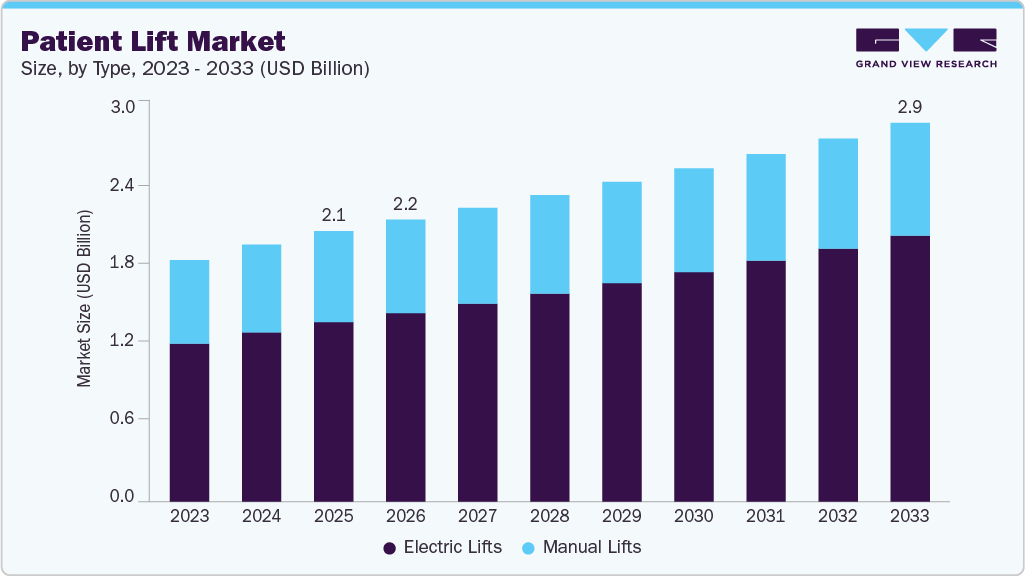
The global patient lift market is a vital component of today’s healthcare infrastructure. It plays an essential role in enhancing patient care and safety, particularly as the population ages. As of 2025, the patient lift market size was estimated at USD 2.10 billion and is projected to reach USD 2.94 billion by 2033, growing at a CAGR of 4.31% from 2026 to 2033. This growth is largely driven by several factors, including an increasing geriatric population, a rise in chronic diseases, and a growing demand for safe patient handling technologies.
Key Market Trends & Insights
Dominance of North America
North America leads the patient lift market with a staggering 40.79% revenue share in 2025. The U.S. accounts for the largest portion of revenue within this region. The strong adoption of patient lifts in North America is driven by stringent regulatory frameworks aimed at ensuring patient and caregiver safety.
Product and Type Overview
Within the patient lift sector, the mobile lifts segment held the largest revenue share in 2025. Furthermore, electric lifts emerged as the most popular type, providing both efficiency and ease of use. Hospitals remain the leading end-user for these technologies, reinforcing the need for reliable lifting solutions.
Driving Factors Behind Market Growth
Aging Population
The aging global population is a significant driver for the patient lift market. Older adults face mobility challenges due to chronic illnesses and physical weaknesses. Patient lifts are crucial for assisting these individuals in daily tasks, ensuring safety, and maintaining dignity. As the trend towards longer life expectancy continues, healthcare systems are leaning towards technologically advanced and user-friendly solutions.
Rise in Chronic Diseases
The increasing prevalence of chronic conditions such as arthritis, stroke, and Parkinson’s disease directly affects market demand. Patients suffering from these diseases often require assistance for mobility, leading to the necessity of reliable lifting equipment in various healthcare settings.
Rehabilitation and Long-term Care Facilities
The expansion of rehabilitation facilities and long-term care centers also bolsters the market. As the demand for specialized care increases, so does the need for efficient patient lifting solutions that prioritize safety and comfort for both patients and caregivers.
Innovations in Patient Lift Technologies
Technological Advances
Recent advancements in the industry are transforming the landscape of patient lifts. Modern devices are integrating electric and hydraulic mechanisms, providing seamless operations that significantly reduce caregiver strain. Innovations include IoT-enabled monitoring, ergonomic designs, and advanced safety sensors. For example, the introduction of electric and portable lifts has revolutionized home healthcare by enhancing the quality of patient care.
Mergers and Acquisitions
The patient lift market is witnessing a rise in mergers and acquisitions, reflecting a consolidation trend among prominent healthcare equipment manufacturers. These strategic moves aim to strengthen product offerings and distribution networks while enhancing technological capabilities, resulting in improved patient experiences.
Regulatory Impact and Compliance
Regulatory frameworks from organizations like OSHA and FDA emphasize the importance of safe patient-handling equipment, encouraging institutions to adopt patient lifts. Compliance with safety standards not only boosts the reliability of these devices but also ensures that hospitals and care facilities provide a secure environment for both patients and caregivers.
Market Dynamics and Expansion
The patient lift market is characterized by ongoing product innovations aimed at improving usability and safety. Manufacturers are expanding their portfolios to include a diverse range of lifts, including ceiling-mounted and sit-to-stand models, enhancing patient mobility in various settings.
Regional Insights
North America
North America remains a market leader, spurred by its advanced healthcare infrastructure and robust regulations supporting patient safety.
European Landscape
In Europe, the patient lift market is experiencing growth due to an aging population and government initiatives promoting safe patient handling. Countries like Germany, the U.K., and France are at the forefront of this transition.
Asia-Pacific
The Asia-Pacific region is rapidly expanding, fueled by a burgeoning elderly population and increasing healthcare investments. Countries like Japan, China, and India lead the charge, focusing on affordable and efficient patient-handling solutions.
Middle East & Africa
In the Middle East and Africa, the market is gradually growing, driven by rising healthcare investments and improvements in awareness regarding safe handling practices.
Product Insights
The mobile lifts segment continues to dominate, largely because of their flexibility and ease of use in various environments. Moreover, sit-to-stand lifts are expected to witness the fastest growth, especially in rehabilitation centers and home care services.
End-use Insights
Hospitals are the largest consumers of patient lifts, heavily relying on advanced equipment to manage limited mobility patients effectively. Meanwhile, the homecare segment is expected to grow rapidly as families seek convenient and effective solutions for assisted living.
Key Industry Players
Several prominent companies are shaping the patient lift market, such as Sunrise Medical, Arjo, GF Health Products, and Baxter. These firms are known for their innovative approaches and commitment to enhancing patient and caregiver safety.
Recent Developments
Recent product launches, such as Arjo’s Maxi Move 5 and Invacare’s Birdie Evo XPLUS, exemplify the industry’s commitment to improving efficiency and safety in patient mobility solutions.
The growth trajectory of the patient lift market underscores its critical role in modern healthcare, promoting both patient safety and caregiver comfort as demographic and health trends evolve.