
The Struggles of Accessing Mobility Equipment in Remote Queensland
A Daily Challenge
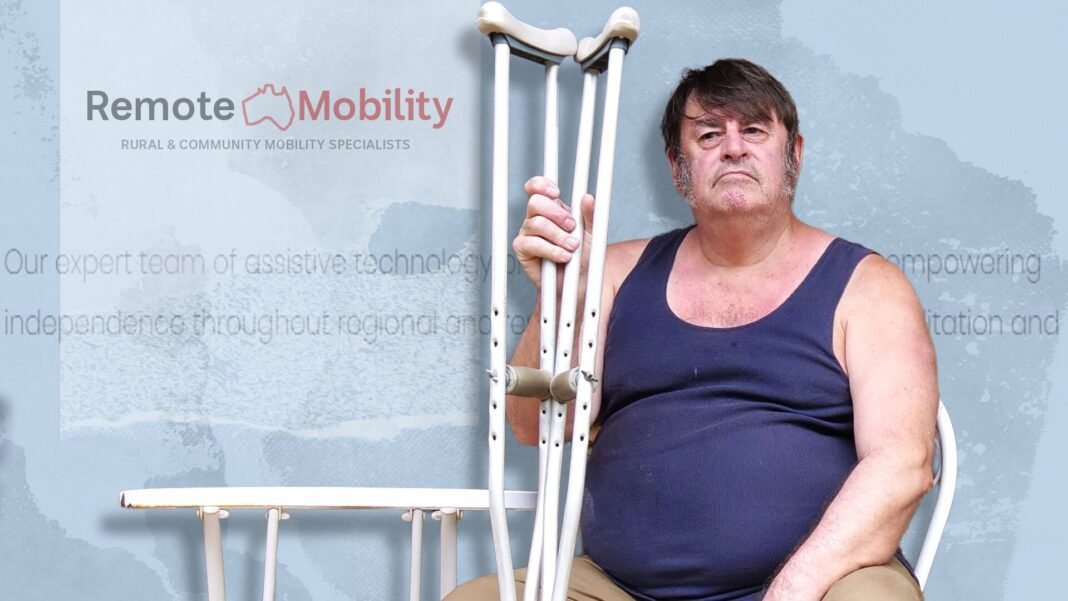
Russell Burns, a resilient 64-year-old, faces a daily uphill battle. Living in Barcaldine, central west Queensland, he struggles to walk and can barely leave his house without assistance. Like many in remote communities, Russell’s mobility issues are exacerbated by the limited availability of essential equipment. His hopes for independence hinged on acquiring a mobility scooter, valued at $6,300, from a local business that promised to revolutionize medical accessibility in the bush.
Disappearing Act
When Mr. Burns placed his order with Remote Mobility, he felt optimistic. After all, this was a company that pledged to serve the outback with tailored solutions. However, months passed without a word from the business or its owner, Christopher St Clair. “I thought they were reliable,” Russell remarked, noting that friends in town often asked where he had been. “I just tell them I’ve been at home. I can’t go far.”
Attempts to contact Remote Mobility were met with silence. “They just disappeared into the blue. That’s odd. That’s weird,” Russell expressed, frustration evident in his voice. Multiple messages left by him went unanswered, leaving him in a lurch.
Business Troubles
The situation took a turn when local police informed Mr. Burns that Mr. St Clair had declared the business insolvent. Meanwhile, attempts to reach both Mr. St Clair and Remote Mobility by the media were unsuccessful, raising questions not just for Russell, but for many clients who found themselves left in a lurch.
Awareness of Needs
Katie Grehan, the manager of Outback Independent Living and a vocal advocate for people with disabilities in western Queensland, recounted how Mr. St Clair approached her organization via social media to participate in a disability expo in Longreach last November. Remote Mobility claimed to offer in-person support and a unique shopping experience tailored for remote communities, a promise that seemed to resonate deeply with individuals like Mr. Burns.
The absence of such services poses a significant barrier for those in rural areas. On a now-defunct website, Remote Mobility pledged to provide caring solutions for people in need, a promise that seemed to evaporate as quickly as it was made.
Vulnerability in Remote Areas
Grehan expressed concern that Remote Mobility deliberately targeted the vulnerable. “They knew the need and they understood the problems they were trying to solve,” she noted. The value of mobility services and equipment is often immense; for some individuals, costs could easily reach up to $10,000, encompassing long-term contracts for servicing and maintenance.
For Russell, the investment was made possible through a home-support grant that Grehan assisted him in securing. “He is not eligible for NDIS or My Aged Care,” Grehan explained. “His situation represents a unique vulnerability.”
The Disappearing Products
Grehan’s attempt to procure the electric scooter for Russell in March culminated in silence from Remote Mobility. The last correspondence she received was in May, claiming the scooter was ready for delivery. “Within a few weeks of no contact, I reached out to the manufacturer only to find out the goods were never ordered, paid for, or delivered,” she reported.
Mr. St Clair had also registered multiple healthcare businesses since 2021, but the evidence suggested more trouble downstream. His Australian Business Number (ABN) had been canceled just a month prior, underscoring the precariousness of the entire situation.
Voices from Other Vulnerable Individuals
Similar stories of neglect are cropping up across remote regions. In Isisford, an hour’s drive south of Longreach, Belinda Avery, who lives with cerebral palsy, has been navigating her own struggle for mobility aids. In January, she ordered a walker that was supposed to be delivered as part of her NDIS package. Nine months later, she finds herself still waiting and utterly in the dark about her order.
Belinda’s mother, Jocelyn, articulated a broader disappointment as she reflected on how many people in their community have been affected. “Not just for Belinda, but I believe they did this to many other people out here with disabilities,” she lamented.
Path Forward
Russell has managed to secure a second grant from YoungCare, allowing him to pursue an alternative scooter option through a different provider. However, the new arrangement comes with its own complications: the scooter will arrive in a box, requiring local mechanics for assembly and battery installation, denying him the in-person support that was initially promised.
Katie Grehan noted the importance of research when choosing service providers. “There’s a reminder here about due diligence; many people in remote communities are going without essential equipment,” she stated pointedly, underscoring the systemic gap in service provision that leave vulnerable populations without necessary support.
In a region where geographical isolation amplifies challenges, the stories of Russell and Belinda serve as poignant reminders that access to health and mobility equipment should not be a privilege — especially not in today’s world.