

Understanding the Mobility Aid Devices Market
Introduction to Mobility Aid Devices
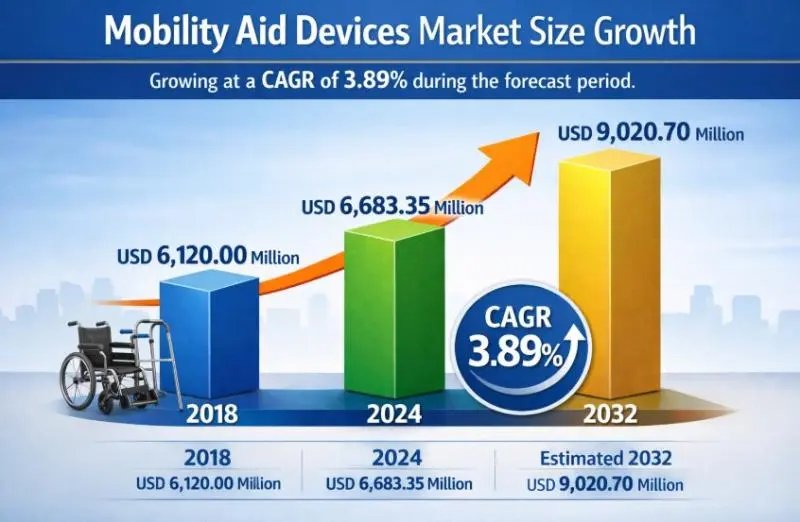
The Mobility Aid Devices Market stands at the intersection of healthcare and assistive technology, fundamentally reshaping the lives of individuals with movement limitations. Spanning across a range of equipment designed to facilitate mobility, these devices serve as essential tools for those impacted by aging, injury, chronic illness, or disability. The market for these devices was valued at USD 6,120 million in 2018, with projections estimating it will grow to USD 9,020 million by 2032, highlighting significant trend lines in consumer needs and technology adaptation.
Demographic Drivers of Market Growth
One of the most significant influences on the market is the rapid aging of the global population. As people age, they often experience a decline in mobility, driven by musculoskeletal disorders and chronic conditions like arthritis and osteoporosis. According to the United Nations, the number of people aged 60 years and older will increase from 1 billion in 2020 to 2.1 billion by 2050. This demographic shift necessitates solutions to maintain independence and quality of life, thereby fuelling the demand for mobility assistance devices.
Moreover, increasing awareness regarding assistive technologies and proactive governmental policies aimed at enhancing accessibility have created a conducive environment for market growth. As healthcare systems evolve to prioritize patient-centered care, the focus on reducing long-term costs and improving quality of life becomes increasingly paramount.
Technological Innovations Transforming the Landscape
Technological advancements are playing a transformative role in the Mobility Aid Devices Market. Smart mobility solutions equipped with artificial intelligence (AI), GPS navigation, and remote monitoring capabilities are quickly gaining traction. Devices such as smart wheelchairs and scooters leverage sensors to detect obstacles, significantly minimizing risks for users. This technological evolution is not just about enhancing the user experience; it’s also about improving rehabilitation outcomes and minimizing caregiver burdens.
Key Growth Drivers
Several factors are driving the growth of mobility aid devices:
-
Aging Global Population: The increasing elderly demographic is one of the primary growth engines for the market. Innovations targeting this segment focus on safety, user-friendly design, and enhanced mobility.
-
Rise in Disabilities and Chronic Diseases: With more people experiencing mobility-limiting conditions, the adoption of mobility aids is on the rise. Lifestyle diseases further exacerbate these challenges, creating a heightened demand for assistive products.
-
Shift Toward Home Healthcare: There’s an ongoing trend toward home-based care, particularly for rehabilitation purposes. This preference solidifies the demand for portable and user-friendly mobility devices.
-
Technological Advancements: Rapid advancements in technology, including IoT and AI integration, are unlocking new possibilities for mobility devices, enhancing their functionality.
-
Improved Accessibility: Access to healthcare is gradually improving in developing economies, leading to a transition toward more sophisticated mobility solutions, including powered devices.
Market Challenges
Despite promising growth, several challenges persist in the Mobility Aid Devices Market:
-
High Costs: Premium smart and powered devices can be prohibitively expensive for many users, potentially limiting widespread adoption in budget-sensitive markets.
-
Reimbursement Issues: Disparities in insurance coverage can restrict access and affordability of mobility devices to those who need them most.
-
Maintenance and Battery Issues: Powered devices require continuous maintenance and battery management, which can complicate usage.
-
Regulatory Compliance: Navigating the stringent regulations associated with the medical device industry can pose significant operational challenges for manufacturers.
Market Segmentation
Understanding the market segmentation is crucial for identifying targeted growth areas:
By Product:
- Wheelchairs: A dominant segment featuring everything from manual options to powered and smart wheelchairs.
- Mobility Scooters: Gaining traction especially among aging populations seeking independence.
- Walking Aids: Affordable and accessible solutions such as walkers, crutches, and canes.
- Mobility Lifts: Focused on increasing accessibility in various environments including homes and vehicles.
By End-User:
- Personal Users: Individuals are increasingly looking for personal mobility solutions.
- Institutional Users: Demand from rehabilitation centers and assisted living facilities drives the need for durable, clinical products.
By Technology:
- Manual Devices: Traditional yet highly utilized solutions due to affordability.
- Powered Devices: Rapidly growing segment includes powered wheelchairs and scooters.
- Smart Devices: Fast-evolving category focuses on integrating innovative technologies for enhanced user experiences.
Regional Market Dynamics
The demand for mobility aid devices varies widely across regions:
-
North America: Dominates market share due to robust healthcare infrastructure and high consumer awareness.
-
Europe: Represents a mature market characterized by strict regulations and strong demand tied to aging populations.
-
Asia-Pacific: Emerging rapidly as a high-growth area, driven by increasing healthcare modernization and a rise in the elderly demographic.
-
Latin America: Gradual growth aided by improving healthcare access and medical awareness.
-
Middle East and Africa: Consistent adoption in GCC countries and South Africa fuels market dynamics.
Competitive Landscape
The Mobility Aid Devices Market features a mix of established global manufacturers and specialized providers, each focusing on innovation and product differentiation. Key players include:
-
Invacare Corporation: Known for a wide range of mobility products including wheelchairs and rehabilitation equipment.
-
Sunrise Medical: Recognized for premium mobility solutions with strong brand equity.
-
Ottobock Healthcare: A leader in assistive technologies focusing on biomechanics.
-
Permobil AB: Prominent for advanced powered wheelchairs.
-
Pride Mobility Products Corporation: Widely acknowledged for their diverse range of mobility scooters.
Manufacturers face competition centered around technological innovation, regulatory compliance, and the ability to deliver valuable user experiences.
Future Prospects
The long-term outlook for the Mobility Aid Devices Market remains positive. Emerging opportunities include the expansion of smart mobility ecosystems and innovations in lightweight, portable designs. The increasing focus on AI-driven safety features and growing emphasis on home healthcare solutions position the market for continued transformation.
Sources for Further Reading
For inquiries or more information, please reach out to Credence Research.