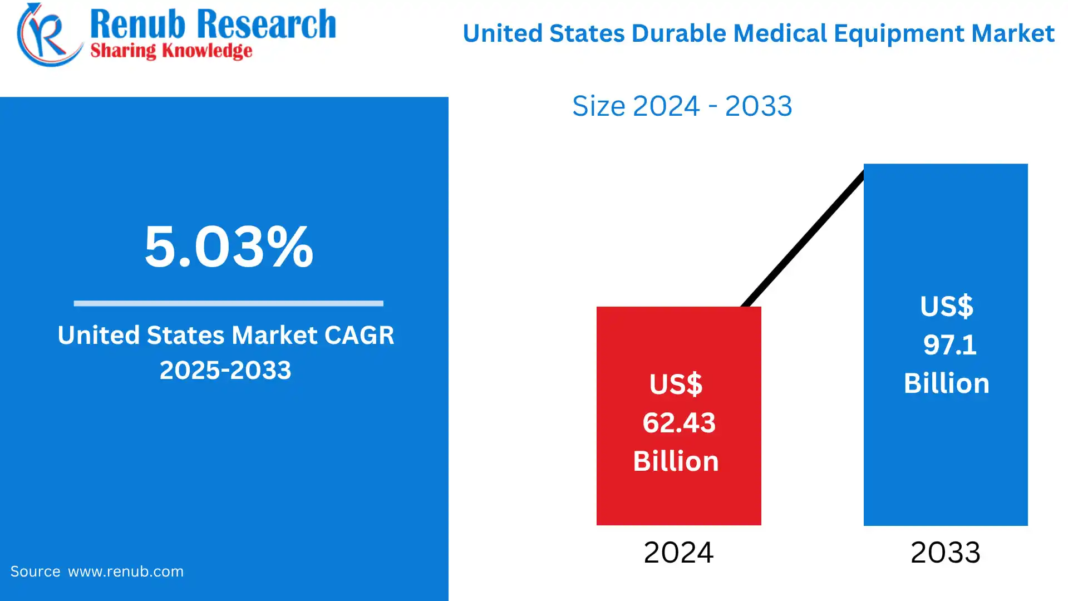


According to Renub Research’s latest report, the electric wheelchair market is witnessing significant growth, driven by a rising demand for advanced mobility solutions among aging populations and individuals with disabilities. Valued at approximately US$ 3.96 billion in 2024, this market is projected to soar to an impressive US$ 8.53 billion by 2033, registering a remarkable compound annual growth rate (CAGR) of 8.91% from 2025 to 2033. Factors fueling this growth include technological advancements, increasing healthcare awareness, government initiatives promoting assistive devices, and a broader desire for convenience and independence among users.
Electric Wheelchair Market Overview
Electric wheelchairs, also referred to as motorized wheelchairs, are paramount for individuals with limited mobility, facilitating enhanced movement and independence. Powered by either sealed lead-acid (SLA) or lithium-ion batteries, these wheelchairs incorporate motors, brakes, and power bases beneath the seat. Modern models showcase ergonomic seating, customizable cushions, headrests, backrests, and intuitive control systems such as joysticks, voice-activated commands, or devices that respond to head and breath movements.
These devices cater to a burgeoning need among individuals suffering from neurological, orthopedic, or other mobility-related conditions. Unlike traditional manual wheelchairs, electric variants empower users to navigate diverse terrains—gravel, grass, soft surfaces, and uneven ground—with ease. They aid in pressure relief, offer posture control, and reduce dependency on caregivers, all contributing to an improved quality of life.
Smart mobility technology advancements have introduced features like app connectivity for usage tracking, adjustable settings, and remote assistance, all of which elevate user independence. Additionally, the uptick in Paralympic sports and recreational mobility activities opens new avenues for market growth. Global reimbursement schemes and customizable wheelchair options further bolster this expanding market.
Want to explore detailed market trends, segment insights, and forecasts?
 Want to explore detailed market trends, segment insights, and forecasts?
  Request Free Sample Report
Growth Drivers in the Electric Wheelchair Market
1. Aging Population and Increasing Disabilities
The global demographic is aging at an unprecedented rate. The World Health Organization predicts that by 2030, one in six people will be aged 60 or older. The number of adults over 60 is expected to grow from 1 billion in 2020 to 1.4 billion by 2030, potentially reaching 2.1 billion by 2050. As the population aged 80+ is set to triple by that time, mobility restrictions due to age-related issues like arthritis and muscular weakness are creating a surge in demand for electric wheelchairs. These devices enhance mobility, comfort, and autonomy, leading manufacturers to innovate senior-friendly designs.
2. Technological Advancements
Technological innovations are revolutionizing the electric wheelchair market. Key advancements include:
- Longer-lasting, faster-charging batteries
- Lightweight materials, such as carbon fiber, for better portability
- Enhanced control systems featuring voice activation and joysticks, accommodating users with limited hand mobility
- Smart connectivity options that allow for app-based settings and customization
A notable example is Sunrise Medical’s LECKEY MyWay+ Gait Trainer, launched in October 2023, designed for children’s independence and posture support through an easy-to-use open-frame design.
3. Growing Healthcare Awareness
Heightened awareness of the benefits that mobility aids provide is propelling market growth. Electric wheelchairs are recognized as vital tools for maintaining independence, easing caregiver strain, and enhancing overall quality of life. Healthcare facilities and professionals increasingly recommend these devices, integrating them into rehabilitation programs and long-term care strategies.
Market Challenges
1. Regulatory Hurdles
Diverse regulatory environments pose challenges by complicating product introductions and market adoption. Manufacturers are often required to navigate intricate medical device certification processes and comply with local regulations, which can delay market entry and escalate costs, restricting access to advanced electric wheelchairs.
2. Maintenance and Service Complexity
Specialized maintenance is crucial for electric wheelchairs, especially pertaining to batteries, motors, and electronic components. The high costs associated with maintenance and the need for trained technicians, particularly in rural or underserved areas, can affect adoption rates. Users may find periodic servicing inconvenient, impacting their overall experience.
Electric Wheelchair Market Overview by Regions
North America
North America is a leader in the electric wheelchair market, credited to its advanced healthcare infrastructure, significant disability prevalence, and a rapidly aging population. Innovations in mobility solutions, coupled with government reimbursement programs, have accelerated market adoption. Key trends such as integrated smart technologies and ergonomic designs are prominent in this region.
United States
The U.S. market is among the largest globally for electric wheelchairs. According to a CDC report from July 2024, over 28% of U.S. adults experience some form of disability, with 12.2% facing significant mobility challenges. Government programs like Medicare and Medicaid help support market expansion, although high costs, maintenance complexities, and regulatory hurdles persist as significant challenges.
Europe
Germany leads the European market, driven by its aging population and robust healthcare system. With 18.89 million seniors, Germany exhibits the highest demand for electric mobility solutions, followed by countries like the UK, France, Italy, and Spain. Government initiatives supporting accessibility and assistive devices fuel this adoption.
Asia-Pacific
The Asia-Pacific region is experiencing rapid expansion due to urbanization, improved healthcare access, and a heightened awareness of mobility aids. Countries such as China and India are pivotal contributors, aided by government initiatives promoting disability inclusion and elderly care. While challenges like high costs and limited awareness in rural regions persist, market penetration continues to improve.
Middle East & Africa
The electric wheelchair market in the Middle East and Africa is on the rise, driven by aging populations and heightened healthcare expenditure. Countries like Saudi Arabia are significant markets, with growth propelled by awareness campaigns, improved accessibility, and the prevalence of mobility-related disabilities.
Product Segmentation
The electric wheelchair market can be segmented into various categories:
- Center Wheel Drive – Offers a tight turning radius, ideal for indoor maneuverability.
- Front Wheel Drive – Effective for navigating slopes and uneven terrains.
- Rear Wheel Drive – Provides comfort and stability for long-distance mobility.
- Standing Electric Wheelchairs – Enable users to stand partially or completely, offering health benefits.
- Others – Custom or hybrid models tailored to specific medical needs or recreational activities.
Age Group Segmentation
- Below 20 years – Pediatric electric wheelchairs for young individuals facing mobility impairments.
- 21 to 60 years – Catering to adults with temporary or permanent mobility limitations due to varied conditions.
- Above 60 years – Seniors requiring mobility aids, making this the fastest-growing segment globally.
End-User Segmentation
- Hospitals – Essential for patient mobility and rehabilitation.
- Clinics – Utilized in rehabilitation centers for therapy sessions.
- Home Care – Personal use enhances daily independence and mobility.
Regional Country Breakdown
- North America: United States, Canada
- Europe: France, Germany, Italy, Spain, UK, Belgium, Netherlands, Turkey
- Asia-Pacific: China, Japan, India, South Korea, Thailand, Malaysia, Indonesia, Australia, New Zealand
- Latin America: Brazil, Mexico, Argentina
- Middle East & Africa: Saudi Arabia, UAE, South Africa
- Rest of World: Emerging markets
Key Players in the Electric Wheelchair Market
Several prominent companies are leading the charge in the electric wheelchair market:
- Invacare Corporation – Offers a diverse range of electric wheelchairs equipped with advanced mobility solutions.
- Dassault Systemes SA – Specializes in assistive mobility software and simulation solutions.
- Sunrise Medical – Renowned for its innovative wheelchairs featuring ergonomic designs.
- Karman Healthcare, Inc. – Provides cost-effective, user-friendly electric mobility products.
- Pride Mobility Products Corp. – Offers a variety of electric wheelchair models to meet diverse user needs.
- Permobil AB – Focused on premium, technologically advanced electric chairs.
- Sermax Mobility Ltd. – Delivers custom and hybrid mobility solutions.
- Carex Health Brands, Inc. – Offers electric wheelchairs targeted at seniors and home care.
Each company is assessed based on:
- Overview and key executives
- Product portfolio
- Recent developments and strategies
- Revenue and market positioning
Market Outlook
The future of the electric wheelchair market appears optimistic, fueled by:
- Aging populations facing growing mobility challenges.
- Increasing incidences of disabilities and neurological disorders.
- Technological advancements enhancing battery life, maneuverability, and user-friendliness.
- Market expansion in emerging territories due to urbanization and heightened healthcare awareness.
- Strong government initiatives and reimbursement programs that champion accessibility.
While challenges such as high costs, complex maintenance, and regulatory compliance persist, innovation, governmental support, and market education are addressing these issues. By 2033, electric wheelchairs are anticipated to become integral tools to improve mobility, autonomy, and overall quality of life for millions across the globe.
Note: For any additional details, insights, or specific information not covered, our customization service is available to meet your unique needs. Share your requirements, and we will refine the report to suit your expectations.