

The Electric Wheelchair Market: Empowering Freedom and Dignity
Introduction: A Market Empowering Freedom and Dignity
Mobility is not merely about movement; it embodies freedom, independence, dignity, and active participation in daily life. For millions of individuals across the globe—those living with disabilities, chronic ailments, or age-related limitations—electric wheelchairs have emerged as transformative solutions. No longer just basic assistive devices, today’s electric wheelchairs have evolved into sophisticated mobility platforms, driven by advanced battery technology, smart controls, and a strong focus on user-centered design.
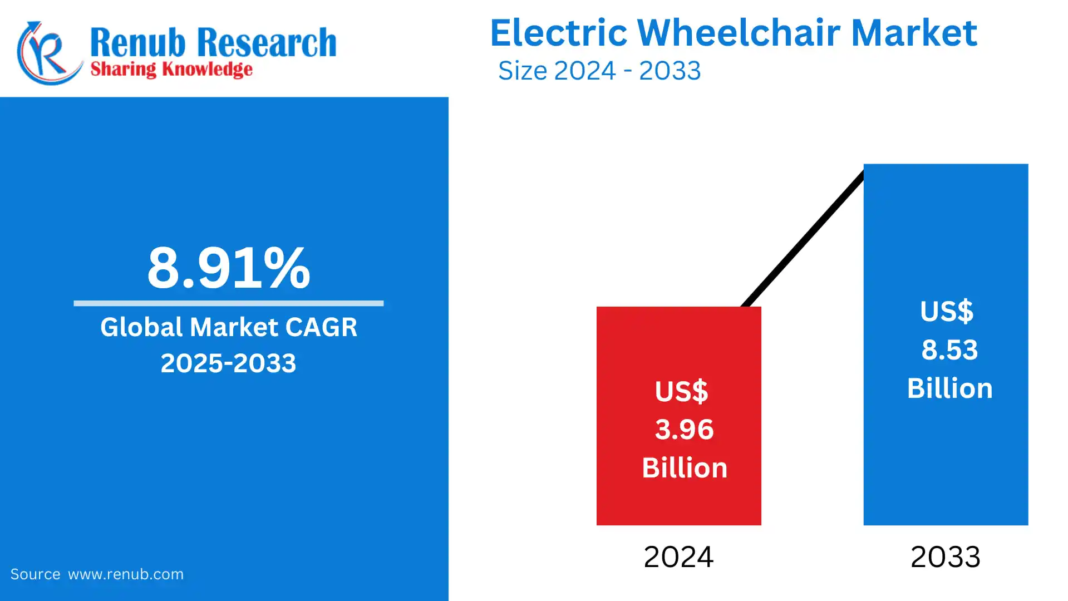
According to Renub Research, the global electric wheelchair market is anticipated to surge from $3.96 billion in 2024 to $8.53 billion by 2033, with a robust compound annual growth rate (CAGR) of 8.91% from 2025 to 2033. This growth is significantly influenced by increasing healthcare awareness, a rapidly aging population, the rising prevalence of disabilities, technological advancements, and amplified government support for assistive technologies. As societies strive for inclusivity and accessibility, electric wheelchairs are no longer considered niche products; they are essential tools reshaping the future of healthcare and rehabilitation.
Electric Wheelchair Market Overview
Electric wheelchairs, also referred to as motorized wheelchairs, are battery-powered devices designed for individuals who are unable to manually operate traditional wheelchairs. These innovative devices are typically powered by sealed lead-acid (SLA) or lithium-ion batteries and utilize various control systems—including joysticks and switches—to facilitate effortless movement.
Modern electric wheelchairs boast an array of advanced features, including:
- Advanced Braking Systems: Ensuring user safety.
- Programmable Controllers: Allowing customization according to individual preferences.
- Adjustable Seating Components: Enabling comfort and proper posture.
- Pressure-Relief Cushions: Available in gel, foam, or air-filled options for enhanced comfort.
- Terrain-Adaptable Wheels: Equipped for navigating grass, gravel, or uneven surfaces.
These wheelchairs extend beyond simple transportation; they enhance posture management, support independence, and ensure long-term comfort, playing a critical role in both home care and clinical rehabilitation.
Key Growth Drivers of the Electric Wheelchair Market
1. Growing Elderly Population
A significant driver of the electric wheelchair market is the demographic shift toward an increasingly aging population. The World Health Organization projects that by 2030, one in six people globally will be over the age of 60, and this figure will rise to over 2.1 billion by 2050.
As individuals grow older, they face a heightened risk of conditions like arthritis, osteoporosis, and muscular degeneration, which can impede mobility. Electric wheelchairs offer older adults:
- Safe Mobility: Providing reliable transportation while minimizing fall risks.
- Reduced Dependency on Caregivers: Allowing more independence.
- Improved Quality of Life: Enhancing overall well-being and self-worth.
- Social Engagement: Empowering seniors to remain active within their communities.
With the anticipated tripling of seniors aged 80+ by 2050, there will be an increasing demand for user-friendly and comfortable mobility solutions.
2. Technological Advancements
Technology is revolutionizing the capabilities of electric wheelchairs. Innovations in battery efficiency, lightweight materials, and smart controls have broadened access, enhanced durability, and allowed for further customization.
Key technological trends shaping the sector include:
- Lithium-Ion Batteries: Offering longer life and expedited charging times.
- Lightweight Frames: Utilizing aluminum and carbon fiber for improved portability.
- Voice-Controlled Systems: Enabling hands-free navigation.
- App-Based Controls: Facilitating performance tracking and management.
- AI-Assisted Features: Enhancing movement capabilities and obstacle detection.
An example of innovation is the LECKEY MyWay+ Gait Trainer, introduced by Sunrise Medical in October 2023, designed to help children with mobility impairments gain independence.
3. Rising Healthcare Awareness and Disability Inclusion
Global awareness around disability rights and mobility limitations has reached new heights. This surge in understanding has led governments, healthcare providers, and NGOs to promote inclusive infrastructure and assistive technologies, thereby integrating electric wheelchairs into mainstream healthcare systems.
These devices are now commonly prescribed for conditions such as:
- Post-Surgical Recovery: Enhancing mobility for rehabilitation.
- Long-Term Rehabilitation: Promoting recovery for individuals with neurological disorders.
- Chronic Ailments: Supporting those living with long-term disabilities.
- Elderly Care: Enabling seniors to maintain active lifestyles.
The growing acceptance of electric wheelchairs is stimulating demand across hospitals, clinics, and home care settings globally.
Challenges Facing the Electric Wheelchair Market
1. Regulatory Hurdles
Electric wheelchairs are classified as medical devices in many regions, which subjects them to strict safety and quality regulations. Navigating these regulations poses challenges, including:
- Lengthy Approval Processes: Causing delays in product availability.
- Complex Compliance Requirements: Necessitating thorough understanding and adherence.
- Region-Specific Certifications: Increasing the burden on manufacturers.
These barriers contribute to higher production costs, extended timelines for product launch, and limitations on international distribution, particularly affecting smaller companies.
2. Maintenance and Repair Difficulties
Electric wheelchairs often require specialized maintenance for their motors, electronics, and batteries. Access to trained technicians can be limited in rural or economically disadvantaged areas, leading to prolonged downtime and discouraging user adoption. Additionally, high repair costs can be particularly burdensome for older adults living on fixed incomes.
Regional Market Insights
North America: Leading the Charge
North America commands a significant position in the electric wheelchair market due to its:
- Advanced Healthcare Infrastructure: Facilitating adoption and innovation.
- High Awareness of Disability Rights: Promoting inclusivity.
- Favorable Reimbursement Policies: Supporting access to advanced mobility devices.
Both the U.S. and Canada are heavily investing in assistive technologies, positioning the region as a hub for market growth.
U.S. Electric Wheelchair Market
The United States stands out as one of the largest electric wheelchair markets worldwide. As of July 2024, statistics reveal that 28.7% of U.S. adults live with a disability, with 12.2% experiencing significant mobility challenges. Government programs, including Medicare and Medicaid, foster adoption, while private insurance increasingly covers advanced mobility devices. However, the complexities of high costs and regulatory environments persist as barriers.
Europe: Aging Population Drives Demand
Europe is witnessing rapid growth in the electric wheelchair sector due to its aging demographics and robust governmental support for assistive technologies.
Germany Electric Wheelchair Market
Germany leads Europe with 18.89 million individuals aged 65 and above. The country’s focused healthcare system and emphasis on rehabilitation technology are driving demand for electric wheelchairs.
Asia-Pacific: Fastest-Growing Frontier
The Asia-Pacific region is emerging as the fastest-growing market segment, driven by urbanization, enhanced healthcare access, and rising awareness of disability inclusion.
India Electric Wheelchair Market
India exhibits steady growth in its electric wheelchair market fueled by:
- An increasing elderly population.
- A rise in mobility disorders.
- Government initiatives advancing disability inclusion.
- Expanding home healthcare services.
Despite challenges, including high costs and limited rural accessibility, long-term growth is anticipated in this sector.
Middle East & Africa: Emerging Opportunities
Saudi Arabia Electric Wheelchair Market
In Saudi Arabia, the electric wheelchair market is expanding due to heightened healthcare investments, increased disability awareness, and initiatives aligned with Vision 2030. There is a strong focus on improving the quality of life for individuals with disabilities, accelerating the demand for electric mobility solutions.
Electric Wheelchair Market Segmentation
By Product Type
- Centre Wheel Drive
- Front Wheel Drive
- Rear Wheel Drive
- Standing Electric Wheelchairs
- Others
By Age Group
- Below 20 Years
- 21 to 60 Years
- Above 60 Years
By End Users
- Hospitals
- Clinics
- Home Care
By Region
- North America (U.S., Canada)
- Europe (Germany, UK, France, Italy, Spain, others)
- Asia-Pacific (China, Japan, India, Australia, ASEAN)
- Latin America (Brazil, Mexico, Argentina)
- Middle East & Africa (Saudi Arabia, UAE, South Africa)
Competitive Landscape: Innovation in Motion
Leading companies in the electric wheelchair market are making significant investments in research and development, customization, and digital integration to maintain their competitive edge. Key players include:
- Invacare Corporation
- Dassault Systèmes SA
- Sunrise Medical
- Karman Healthcare, Inc.
- Pride Mobility Products Corp.
- Permobil AB
- Sermax Mobility Ltd.
- Carex Health Brands, Inc.
These companies are analyzed on multiple strategic dimensions, including company overview, key leadership, product portfolios, recent developments, and revenue performance.
Future Outlook: A Smart, Inclusive Mobility Ecosystem
The electric wheelchair market is on the brink of transformation, where mobility transcends simple movement. The focus is shifting toward empowerment, personalization, and the integration of digital healthcare. Over the next decade, we can expect:
- AI-Powered Navigation and Safety Systems
- Smart Wheelchairs Integrated with Health Apps
- Affordable Models for Emerging Markets
- Lightweight, Foldable Designs for Easier Travel
- Sustainable Battery Innovations
As healthcare systems globally evolve toward home-based care and rehabilitation focused on independence, electric wheelchairs will play an instrumental role in redefining mobility and accessibility, ensuring that millions can navigate the world with dignity and autonomy.