

The Global Electric Wheelchair Market: Growth and Dynamics
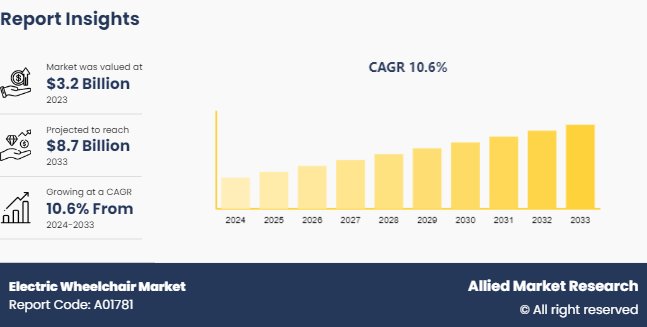
The global electric wheelchair market, valued at $3.2 billion in 2023, is projected to soar to $8.7 billion by 2033, with a compound annual growth rate (CAGR) of 10.6% from 2024 to 2033. This growth underscores a critical shift in how mobility devices are perceived and utilized, marking an evolution aimed at enhancing independence and accessibility for individuals with mobility impairments.
Understanding Electric Wheelchairs
Electric wheelchairs, powered by batteries and integrated with electric motors, offer mobility solutions that allow users to navigate various terrains with minimal physical effort. These devices are indispensable for people with disabilities, the elderly, and those with medical conditions limiting their mobility. With advancements in technology, electric wheelchairs now incorporate features such as powered seating, joystick controls, and smart functions like artificial intelligence (AI) and the Internet of Things (IoT), enhancing user experience and connectivity with healthcare providers.
Key Market Dynamics
The Aging Population
One of the primary drivers behind the electric wheelchair market is the global aging population. As countries witness an increase in the elderly demographic, especially those suffering from age-related conditions such as arthritis and osteoporosis, the need for mobility aids becomes more pronounced. In developed nations, a significant emphasis on healthcare systems focusing on quality of life and independence results in higher adoption rates of electric wheelchairs. According to the World Health Organization, about 1 billion people globally experience some form of disability, making them the largest minority and further highlighting the need for accessible mobility solutions.
Barriers to Entry
However, a notable restraint hindering market growth is the high cost associated with advanced electric wheelchairs. As these devices often come equipped with sophisticated technologies—such as advanced seating, suspension systems, and enhanced controls—the financial burden can be a decisive factor for many potential users. In places where healthcare coverage for mobility aids is minimal, these costs can discourage ownership, particularly among low-income individuals and families in developing regions.
Technological Innovations
In contrast to these barriers, the increasing integration of AI and IoT within electric wheelchairs represents a monumental growth opportunity. Smart wheelchairs can now feature autonomous navigation, obstacle detection, health monitoring, and connectivity with health networks, thus fostering enhanced safety and user convenience. These innovations not only improve user experience but also offer avenues for preventive healthcare and smart home integration, further driving market expansion.
PESTLE Overview
A PESTLE analysis sheds light on the external factors influencing the electric wheelchair market:
-
Political: Government policies regarding healthcare funding and disability rights significantly affect market dynamics. Regulatory standards for medical devices are paramount.
-
Economic: The economic landscape, including disposable incomes and healthcare expenditure, affects the affordability and demand for electric wheelchairs, with economic downturns potentially dampening consumer spending.
-
Social: Changing attitudes toward disability and increased awareness of mobility issues contribute to market growth, especially among older adults.
-
Technological: Innovations in battery technology and smart features make electric wheelchairs more efficient and user-friendly.
-
Legal: Compliance with medical device regulations, including patents and accessibility laws, also shape market dynamics.
Value Chain of the Electric Wheelchair Market
-
Research and Development (R&D): Companies invest heavily in R&D for innovations in technology, design, and materials.
-
Component Manufacturing: Essential parts—motors, batteries, frames—are produced, often involving various suppliers globally.
-
Assembly and Production: This process ensures quality control for safety and reliability, with some companies offering customization options.
-
Distribution and Logistics: Post-assembly, electric wheelchairs are distributed across retailers, wholesalers, and directly to consumers.
-
Sales and Marketing: Effective promotion highlights product features and benefits to both consumers and healthcare professionals.
-
After-Sales Service and Support: Ongoing customer support, maintenance, and repairs ensure user satisfaction and device longevity.
Market Segmentation
The electric wheelchair market is categorized by type, end user, and region.
-
Type: Includes center wheel drive, front wheel drive, rear wheel drive, and standing electric wheelchairs.
-
End User: Divided into personal and hospital users.
-
Region: Segments include North America, Europe, Asia-Pacific, and LAMEA.
Regional Outlook
The Asia-Pacific region is witnessing the fastest growth in the electric wheelchair market. Countries like Japan, China, and South Korea have rapidly aging populations, leading to increased demand for mobility aids. Economic growth in these regions has enabled more individuals to invest in these technologies, complemented by government initiatives aimed at improving healthcare infrastructure and accessibility. The manufacturing capabilities in countries like China further support market availability and affordability.
Industry Trends
-
Aging Populations: As the United Nations predicts that the population aged 60 and older will more than double by 2050, this demographic shift is propelling demand for assistive mobility devices.
-
Increased Accessibility: Improved designs and affordability, coupled with advocacy for disability rights, are leading to wider adoption of electric wheelchairs globally.
-
Production Growth: North America and Europe remain strongholds for electric wheelchair production, while emerging markets in Asia and Latin America are expanding rapidly due to investment and awareness.
Competitive Landscape
The electric wheelchair market is home to key players such as Invacare Corporation, Pride Mobility Products Corp., and Ottobock Healthcare, among others. These companies focus on innovation and user-oriented designs to stay competitive.
Recent Developments
-
Invacare Corporation introduced the e-fix eco Power Assist Device in February 2022, transforming manual wheelchairs into electric versions.
-
Ottobock launched the Juvo B7 power wheelchair in June 2024, aimed at users with complex needs.
Stakeholder Benefits
Market insights deliver quantitative analyses of segments, along with the identification of prevailing opportunities. Tools such as Porter’s five forces analysis and in-depth segmentation insights aid stakeholders in making strategic business decisions.
This structured overview of the electric wheelchair market highlights its dynamic nature and importance in enhancing the quality of life for many across the globe. The future appears promising, with continuous advancements poised to address the complex needs of users while improving accessibility and affordability.