
Blight on Oakland: Disabled Seniors Navigate Dangerous Streets
OAKLAND, Calif. – In a troubling situation unfolding in East Oakland, a group of disabled seniors is finding their daily lives increasingly hazardous due to encampments obstructing sidewalks. This issue transcends mere inconvenience; it compromises safety and independence for those who rely on mobility aids like motorized wheelchairs.
A Daily Struggle for Safety
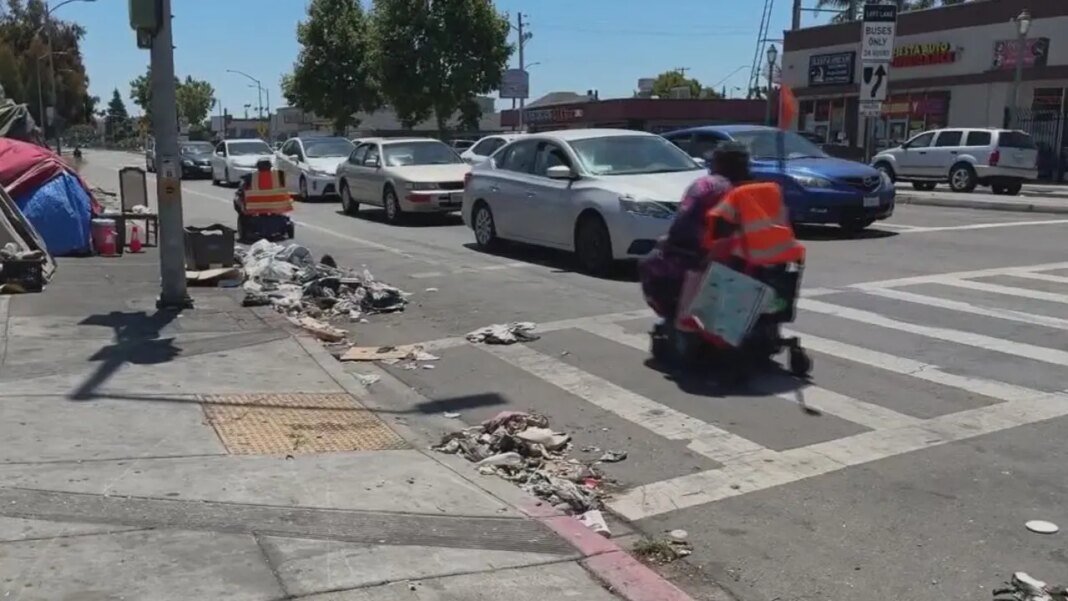
Cathy Harris, Shaaron Green-Peace, and Rose Luster-Brooks are residents of a senior living facility located off International Blvd at 105th Ave. Each day, they face a daunting reality; the encampment nearby forces them to navigate their wheelchairs into the street. This risky maneuver is not only unsafe but adds an element of anxiety to their simple trips outside.
“It’s not safe, it’s not safe at all,” Cathy Harris expresses, voices tinged with worry. Rose Luster-Brooks elaborates, “We have to ride in the street as if we’re cars. It’s unsafe.” The situation is compounded by growing piles of trash accumulating, creating an illegal dumping site that further jeopardizes not only their independence but their overall quality of life.
The Hidden Dangers
The residents are keenly aware that the mess around them isn’t solely attributed to the homeless community. “People are dumping anything you can find in the world right here on the corner,” Luster-Brooks notes, shedding light on the broader issues of neglect and urban decay impacting not just the homeless but vulnerable senior citizens as well.
As a result of this burgeoning waste problem, East Bay Paratransit—services crucial for many disabled residents—can no longer access the designated pick-up point. “A couple of them have tried, and we’re like, ‘How are you going to let us out in this trash?’” Luster-Brooks recounts, revealing the frustration and dismay felt by the seniors as their need for reliable transport is compromised.
A Plea for Help Ignored
The trio hasn’t been silent about their plight. For nearly a year, they have reached out to local authorities, including the mayor’s office and their city councilmember, Ken Houston, yet their voices appear to have fallen on deaf ears. Luster-Brooks articulates their feelings of neglect: “They say they’re for us. We voted for these people, and we’re not being recognized.” Such sentiments highlight the disparity in attention and resources allocated across different neighborhoods, as she contrasts their experience with more affluent areas like Piedmont and the Dimond district.
Official Response to the Crisis
City spokesperson Sean Maher has acknowledged the situation, noting regular requests for clean-ups, affirming that the city’s Encampment Management Team is aware of the location. However, council member Houston admits that although the encampment has been removed twice, it consistently re-emerges. “It’s on the radar, and we’re going to come out, and these seniors should be protected,” he asserts.
Yet, under current city policy, crews cannot remove personal property belonging to those in the encampments, placing limitations on how they can address public safety issues. Maher pointed out, “We recognize the impacts of issues like this on public safety and public health.” In an effort to rectify ongoing concerns, he encouraged residents to continue utilizing the 311 service to report issues, underlining the critical role of community engagement in driving local policy.
Steps Toward Change
Looking ahead, council member Houston has plans to introduce an encampment abatement policy to further address the gaps in current regulations tackled during city council meetings. He aims to advocate for the rights and safety of residents like Harris, Green-Peace, and Luster-Brooks while committing to attend neighborhood meetings to listen to community concerns firsthand.
In the meantime, seniors are gearing up to voice their grievances at the upcoming Mayor’s Commission on Persons with Disabilities meeting, where they hope to elevate attention to their struggles and prompt desired action from Mayor Barbara Lee. The fight for dignity and safety continues as Oakland grapples with complex issues of homelessness and urban blight.