
Seniors on the Streets: An Urgent Request for Safer Sidewalks in Oakland
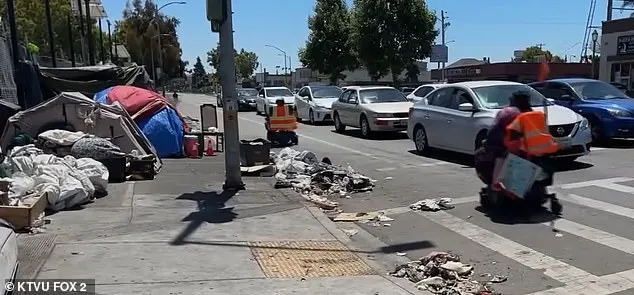
In a distressing situation in Oakland, three disabled senior residents are facing life-threatening choices as they navigate their community. Cathy Harris, Shaaron Green-Peace, and Rose Luster-Brooks, all reliant on motorized wheelchairs, have found the state of the sidewalks near their senior living facility—situated at the intersection of International Boulevard and 105th Avenue—dangerous and disheartening. The accumulation of trash and debris has forced them to venture into the road, an act of desperation that makes their daily travels an unsettling dice with danger.
The Hazardous Sidewalks
The trio expressed their frustrations to local news outlet KTVU, detailing how a growing pile of garbage hampers their mobility. “We have to ride in the street as if we’re cars. It’s unsafe,” Luster-Brooks lamented. Their predicament is compounded by additional refuse dumped not only by the homeless but also by passersby who have increasingly contributed to the unsightly mess.
“We’re seeing everything imaginable just piled up at this corner,” Luster-Brooks continued, showcasing the extent of the problem. The garbage they encounter has rendered areas near their home hazardous, preventing them from using local public transportation options like East Bay Paratransit, which is designed specifically for disabled residents.
Challenges in Transportation
Their struggles extend beyond mere mobility; the garbage-filled environment has made it impossible for bus drivers to pick them up at designated stops. “They no longer can pick us up there. A couple of them have tried and we’re like, ‘how are you going to let us out in this trash?’” Luster-Brooks shared. Instead, they must now meet the bus at a different corner, where the dangers of oncoming traffic loom larger—a compromise that highlights the neglect of their needs.
These seniors, who have lived in the area for some time, feel utterly neglected, having placed repeated calls to city officials, including the mayor’s office and their city council member, Ken Houston. Despite their efforts, they claim to have received no substantial response or assistance.
Voices of the Community
Luster-Brooks articulated a sentiment shared by many residents: “They say they’re for us. We voted for these people, and we’re not being recognized.” While other neighborhoods in the city, such as Piedmont and the Dimond District, appear well maintained, East Oakland residents feel overlooked, raising concerns about disparities in city services.
City spokesperson Sean Maher acknowledged that the area has seen multiple requests for cleanup, confirming that Oakland’s Encampment Management Team is aware of the situation. On the other hand, Councilmember Houston noted that the encampment has been removed twice but continues to resurface, suggesting systemic issues that may extend beyond mere trash.
A Complex Issue
The ongoing situation reflects a broader struggle in Oakland. The city has seen a significant rise in homelessness, with statistics showing an increase of nearly 18 percent since 2019. This surge has led to the emergence of massive tent cities in various neighborhoods, further complicating sanitation and safety efforts.
Compounding the encampment issue, city policies prevent cleanup crews from removing personal belongings without proper protocols. As outlined in regulations passed in 2020, city employees must attempt to store personal property, leading to complications during cleanup efforts.
Safety Concerns Beyond Trash
The concern over public safety in Oakland extends beyond the issues presented by garbage and encampments. Crime rates have surged, with neighborhoods frequently experiencing smash-and-grab robberies that have left residents on high alert. Additionally, the rise in car thefts has contributed to an atmosphere of anxiety, as data reveals more than 9,400 vehicles were reported stolen in just one year.
As officials grapple with a myriad of challenges, the narratives from residents like Harris, Green-Peace, and Luster-Brooks serve as a stark reminder of the urgent need for solutions that not only address the visible markers of neglect but also prioritize the safety and dignity of all citizens, especially those most vulnerable.