
The Importance of Balance as We Age
Balancing may seem effortless when we’re young. Children can hop on one foot to pull on pants or sprint down a trail without a second thought about the loose stones beneath their feet. However, as we age, balance can become a more significant challenge. Factors such as weakened muscles, reduced flexibility, declining vision, and altered spatial awareness contribute to this shift. Conditions like arthritis, neurological disorders, and inner ear problems can further complicate things.
Understanding Balance: A Key to Mobility
“Balance is challenging for many, especially seniors, but it’s essential for our mobility,” says Joseph Davis, a physical therapist with Banner Health. Good balance not only aids in walking and mobility but also plays a crucial role in maintaining independence in everyday tasks. Improved balance can enhance confidence, diminish anxiety, and empower individuals to take control of their lives.
The Path to Better Balance
Fortunately, there are several effective strategies to maintain and even improve balance. Engaging in specific exercises can strengthen muscles, improve coordination, and heighten spatial awareness. These benefits extend beyond preventing falls; enhanced balance helps people remain active, agile, and comfortable in their movements.
Types of Balancing Exercises
To improve your balance, incorporating exercises that challenge your stability is key. “Balancing exercises often involve disrupting your normal base of support, altering your visual input, or forcing your muscles to stabilize your body,” explains Davis. Here are several exercises designed to kickstart your balance training:
1. Heel-to-Toe Walk
- Position: Stand with feet in a straight line, placing the heel of one foot directly in front of the toes of the other.
- Motion: Stand straight and take small steps, continuing to place your heel directly in front of the opposite toe.
- Focus: Keep your eyes on a fixed point ahead to aid balance.
- Repetitions: Aim for 10 to 15 steps, gradually increasing as comfort grows.
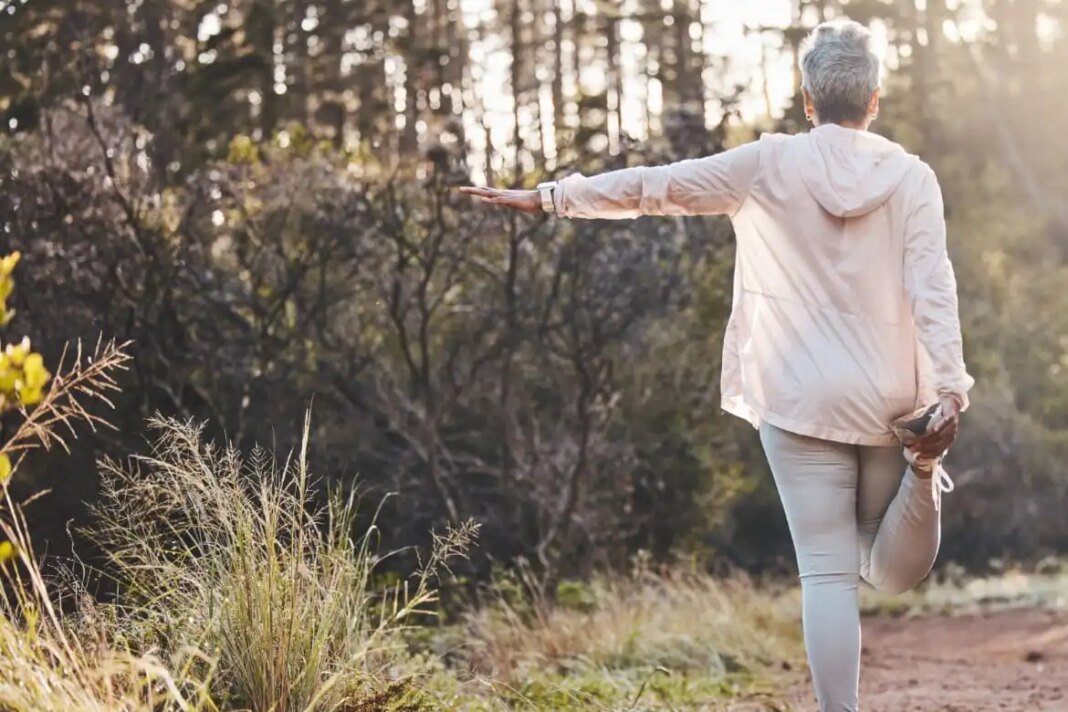
2. One-Legged Stand
- Support: Stand next to a sturdy chair or countertop for support.
- Lift: Raise one leg off the ground, bending it at the knee.
- Hold: Maintain the position for 10 to 15 seconds before switching to the other leg.
- Progression: Gradually increase the duration as balance improves.
3. Toe Taps
- Starting Position: Stand with feet hip-width apart.
- Action: Lift one foot slightly off the ground and tap your toes on the floor.
- Return: Bring your foot back to the starting position.
- Repetitions: Alternate legs for 10 to 15 taps on each side, gradually increasing as you gain strength.
4. Side Leg Lifts
- Stability: Stand next to a chair or countertop.
- Lift: Extend one leg straight out to the side, hold for a moment, and lower it back.
- Repetitions: Complete 10 to 15 repetitions for each leg, increasing over time.
5. Chair Squats
- Setup: Position yourself in front of a sturdy chair, feet shoulder-width apart.
- Squat: Lower your body towards the chair without sitting down, then return to standing.
- Repetitions: Aim for 10 to 15 squats, gradually increasing the count.
6. Wall Push-Ups
- Position: Stand facing a wall at arm’s length, arms extended at shoulder height.
- Movement: Lean in towards the wall like a push-up, then return to the starting position.
- Repetitions: Target 10 to 15 repetitions, increasing as you get stronger.
Exploring Tai Chi
In addition to these exercises, Tai Chi offers excellent benefits for improving balance, flexibility, and relaxation. This gentle practice features slow and controlled movements that encourage weight shifts and conscious body awareness. You can start by joining a local class or following online tutorials.
Establishing a Balance Routine
Incorporating balance exercises into daily life is important for consistent improvement. Start with a few minutes each day and gradually extend the time as you build strength and comfort.
Daily Integration Tips:
- Begin your mornings with balancing exercises.
- Perform toe taps or side leg lifts while watching TV.
- Add heel-to-toe walking to your daily walks.
- Stand on one leg while cooking or brushing your teeth.
- Wind down before bed with relaxing balance exercises.
Safety First
Before engaging in balance exercises, assess your surroundings to ensure a safe environment. Executing these activities on a stable surface is crucial, allowing you to concentrate without the fear of slipping or falling.
For safety:
- Exercise on a flat, non-slip surface.
- Utilize a sturdy chair or countertop for support if needed.
- Remove loose rugs or cords that may pose tripping hazards.
- Make sure the area is well-lit to clearly see your surroundings.
Seeking Professional Guidance
If you have serious balance concerns, consulting a physical therapist or healthcare provider is strongly recommended. They can tailor exercises to your specific needs and help navigate the journey towards better balance. Davis emphasizes that safety is paramount; improving balance can mean intentionally challenging your stability.
If you notice frequent reliance on furniture or experience multiple falls, seeking professional advice could significantly enhance your mobility and quality of life.
Good balance is integral to staying healthy, active, and independent as you age. By integrating balancing exercises into your routine, you can foster confidence in movement and relish a vibrant lifestyle.