
The Surge of Enclosed Mobility Scooters in North Bay
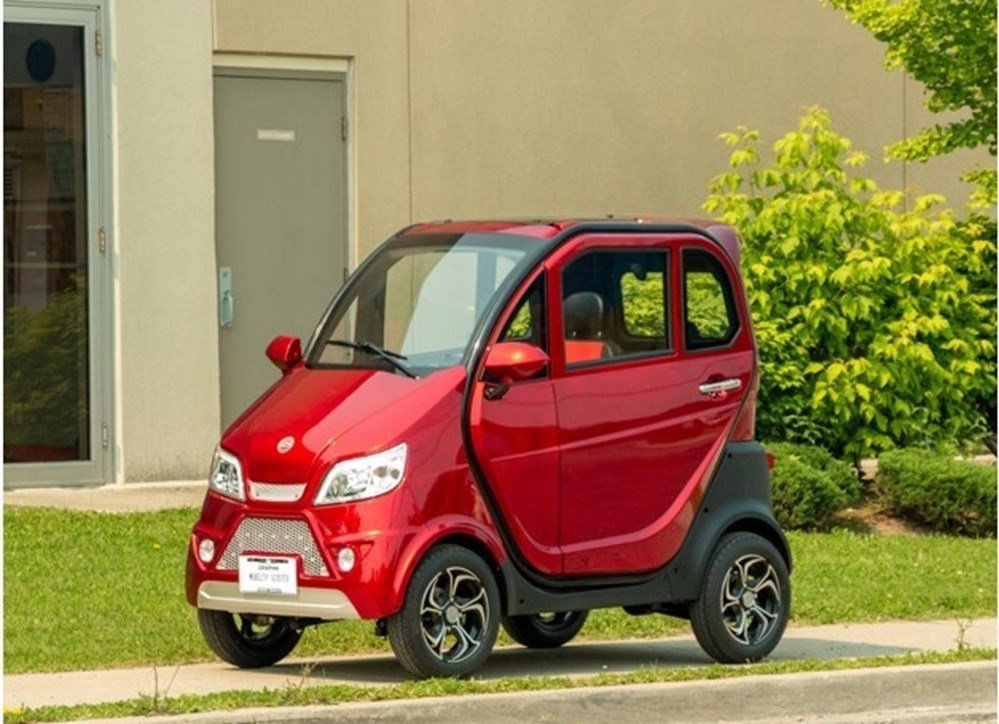
Have you noticed small, compact vehicles weaving through the streets of North Bay? At first glance, they may look like miniature electric cars, zooming past pedestrians and traffic alike. In reality, these are enclosed mobility scooters, and their presence in some areas has caught the attention of local law enforcement.
What Are Enclosed Mobility Scooters?
Enclosed mobility scooters are four-wheeled vehicles designed for personal mobility. They typically measure about one metre in width and range from 1.5 to 2.0 metres in length. With a top speed of 20-30 km/h and a travel range of 50-80 km per charge, these scooters can come equipped with various amenities, such as air conditioning, heating systems, disc brakes, windshield wipers, turn signals, seat belts, and even stereo systems. It’s easy to see why they might be mistaken for micro cars!
Legal Classification and Usage Regulations
Under Ontario’s Highway Traffic Act, enclosed mobility scooters are classified as “pedestrians,” similar to electric wheelchairs. This classification means that operators do not need a driver’s license, permit, insurance, or even a helmet to operate them. However, this also leads to confusion regarding where these scooters can legally be used.
The law stipulates that enclosed mobility scooters may only be operated on sidewalks, pedestrian trails, and parking lots. Where sidewalks are absent, operators can drive along the left edge of roadways—but only while facing oncoming traffic and within the company of other pedestrians.
The Police Response to Scooters on Roadways
Despite a five-month educational grace period meant to inform the public about proper usage, the North Bay Police Service (NBPS) continues to receive multiple complaints. According to Constable Merv Shantz, the scooters pose significant safety risks when operated in live lanes of traffic. “These devices offer minimal impact protection. Riders face serious injury or even death if involved in a collision with a motor vehicle,” he warns.
In response to ongoing traffic violations, the NBPS has announced a zero-tolerance enforcement strategy. Riders can face fines for the following infractions:
- Failing to walk on the left side of the highway, which incurs a total fine of $35 or $50.
- Failing to keep to the left edge of the road while operating the scooter, resulting in another $35 or $50 fine.
- Interfering with vehicle movement can lead to a $50 or $65 fine.
Comparison with E-Bikes and Motorized Vehicles
The legal landscape surrounding e-bikes and e-scooters differs considerably. Classified as power-assisted bicycles under the Highway Traffic Act, these vehicles can operate on roadways, provided they stay as close as possible to the right edge. Riders of e-bikes and e-scooters are required to wear helmets, similar to traditional bicycles.
For higher-powered vehicles like mopeds and motor scooters, which can reach speeds of up to 50 km/h and 70 km/h, respectively, the regulations tighten further. Operators need to stay within traffic lanes, maintain a safe distance to the right for passing cars, and are required to hold at least an Ontario M1 driver’s license. Additionally, they must possess a permit, insurance, and a special license plate. The minimum age for operating e-bikes, e-scooters, mopeds, and motor scooters in Ontario is set at 16.
The Risks of Illegal Modifications
One important caveat within Ontario’s vehicle regulations is that it is illegal to modify any bicycle by adding a gas-powered engine. Operating such modified vehicles on public roads can lead to serious legal repercussions under the Highway Traffic Act, emphasizing the importance of adhering to established safety and operational guidelines.
Navigating the Future of Mobility
As the number of enclosed mobility scooters continues to grow, so too does the need for public awareness and adherence to local laws. The delicate balance between personal mobility and public safety is crucial for ensuring that all road users—be it pedestrians, scooter riders, or drivers—can navigate their environments safely. With law enforcement stepping in to clarify regulations, it remains essential for riders to understand where they can legally operate these compact vehicles to prevent accidents and ensure their safety.