

Human-Centered Design for Smart Home Technologies: A Framework for Aging and Mental Health
Abstract
Smart home technologies (SHTs) offer promising ways to support older adults with both mobility challenges and mental health needs, yet high costs, complex interfaces, and uncertain data practices often limit their adoption. This article addresses these challenges by proposing a human-centered design (HCD) framework that emphasizes affordability, inclusive design for physical and cognitive variations, and transparent data governance. Through illustrative examples of low-cost sensor networks and culturally tailored voice interfaces, we argue that thoughtfully designed SHTs can promote independent living, strengthen mental health interventions, and foster user trust.
Introduction
The rapid growth of the older adult population, projected to exceed 2.1 billion by 2050, has intensified the search for sustainable solutions enabling individuals to age in place. Many older adults face mobility limitations and mental health conditions like depression and anxiety, underscoring the need for holistic home-based support. Smart home technologies, which integrate sensors, telehealth, and artificial intelligence, promise to address some of these challenges. However, the reality is that SHT adoption often remains stunted by affordability barriers, interface complexity, and trust issues, especially for those with limited financial resources or cognitive impairments.
Despite evolving efforts to design SHTs, there remains a persistent gap in addressing both financial accessibility and mental health integration for diverse subpopulations of older adults. This paper proposes a HCD framework to bridge that gap, emphasizing cost-effective sensor networks, mobility-friendly interfaces, and integrated mental health features. Our objective is to offer both conceptual insights and practical recommendations for SHT developers, policymakers, and healthcare providers.
Usability and Accessibility Barriers
Complex Interfaces and Cognitive Overload
Although SHTs promise daily support, many feature intricate layouts that overwhelm older adults. Elements such as small text, multi-level menus, and a lack of guided feedback can cause cognitive overload, particularly among those with mild impairments. Research consistently points to user-centered design—such as large fonts, simplified navigation, and voice-based commands—as effective strategies for enhancing acceptability and user experience.
Mobility Challenges
Physical constraints—such as reduced strength, fine motor control, or balance—pose another hurdle for older adults. Routine tasks, including entering passcodes or accessing devices on high shelves, can be daunting. Hardware featuring larger buttons, ergonomic grips, or sensor layouts that detect gait changes directly addresses these challenges. Such design features also generate mobility data that may help healthcare professionals identify early warning signs of functional decline.
Affordability and Infrastructure
Financial constraints are a significant obstacle for older adults on limited incomes. SHT packages often involve expensive sensors, subscription fees, and the need for reliable internet access—frequently lacking in rural areas. Without financial support or reimbursement options, many older adults forgo these technologies, despite their potential to lower long-term healthcare costs. Policymakers, insurers, and tech developers must collaborate to provide affordable, user-friendly solutions that address both economic and infrastructure barriers.
Privacy Concerns and Data Silos
Continuous monitoring of mobility and emotional states raises concerns about surveillance and data misuse. Older adults may reject “always-on” systems if data policies are unclear or if platforms fail to integrate, resulting in fragmented records. Experts recommend robust encryption, transparent consent processes, and standardized protocols to unify data while safeguarding user privacy—key elements as we integrate SHTs into the everyday lives of older adults.
Additional Insights on Usability and Trust
Studies underscore the importance of real-time monitoring features that respect user privacy while enabling proactive interventions. A user-centered, co-design approach can mitigate adoption barriers by involving older adults directly in the development process. Ensuring a pleasurable user experience—from intuitive navigation to transparent data-sharing policies—can build trust and reduce fears of misuse among aging populations.
Potential of Affordable Mobility-Enhancing SHT Solutions
Low-Cost Sensor Networks
Open-source sensor platforms offer affordable solutions for tracking daily activities, detecting falls, and monitoring behavioral changes. These cost-effective systems provide continuous data streams that support mental health assessments. By linking mobility patterns to emotional well-being, healthcare providers can intervene early to address risks of depression or cognitive decline.
Adaptive Interfaces for Varying Abilities
Voice-activated assistants, gesture-based navigation, and simplified screens enhance accessibility. Individuals with arthritis or tremors benefit from larger on-screen icons and fewer steps. Wearable gadgets paired with in-home sensors ensure around-the-clock coverage, allowing for telehealth integration for remote mental health or physical therapy check-ins.
Community-Oriented Mobility Support
Aging in place is not confined to one’s residence. Linking SHTs to community resources—like ride-share services or tele-rehabilitation—helps older adults stay connected. Location tracking and user-friendly scheduling apps can guide older individuals in real-time, easing social isolation and encouraging sustained participation in daily life.
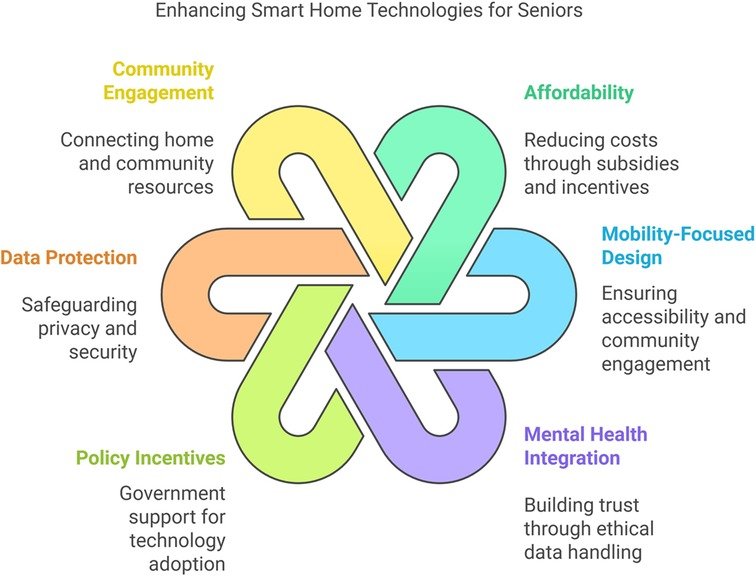
Policy Incentives for Affordability
Home-based solutions can reduce institutional care expenses, prompting policymakers and insurers to explore subsidies for broadband or SHT hardware. Lowering upfront costs is crucial for expanding adoption. Incentives such as tax credits or reimbursement models tied to improved health outcomes will encourage developers to address older users’ unique needs.
Human-Centered Design: A Core Framework
Co-Creation and Iterative Feedback
Genuine older-adult participation in all design stages—from concept to testing—helps reveal usability issues that might otherwise be overlooked. Cultural, linguistic, and cognitive variations come to light through user workshops and pilot studies. Iterative cycles also capture shifting health or mobility needs, ensuring that SHTs remain relevant and responsive to user feedback.
Personalization and Cultural Alignment
Adapting SHTs to local language, customs, or personal preferences promotes ongoing engagement. For example, daily mood-check prompts in a user’s native tongue can mitigate discomfort and stigma. Flexible settings address diverse needs and reflect a commitment to inclusive design, improving overall user experience.
Data Transparency and Security
Older adults often have heightened concerns about data-driven technologies. Providing clear dashboards that show active sensors along with granular consent builds trust. Encryption and user choice in data sharing are essential for empowering users and ensuring their autonomy.
Holistic Monitoring of Physical and Mental Health
Integrating multiple data sources, such as heart rate, gait, and mood logs, creates a fuller picture of well-being. For instance, detecting a sudden dip in physical activity alongside reported low mood may signal an impending depressive episode. By securely sharing insights with authorized caregivers or clinicians, interventions can be proactive rather than crisis-driven.
Discussion
Affordability and mobility are essential for making SHTs accessible to older adults. Well-designed systems can detect or delay cognitive decline, yet barriers such as cost and privacy concerns persist. Collaborative efforts among policymakers, technologists, and healthcare providers are necessary to develop cost-effective hardware, intuitive interfaces, and robust privacy safeguards.
Recommendations
-
Subsidies and Incentives: Financial support from governments or insurers can lower initial costs and boost adoption.
-
Collaborative Design: Involve older adults, caregivers, healthcare professionals, and technologists in iterative co-creation processes.
-
Transparent Data Practices: Clear policies and user-friendly privacy dashboards can build trust and encourage engagement.
-
Community Integration: Linking SHTs to local transit, social activities, and telehealth services supports holistic well-being.
By centering on affordability, usability, and mental health integration, the proposed HCD framework offers a pathway to make SHTs more inclusive and effective for diverse aging populations.
This structured and insightful exploration reflects the interconnectedness of aging, technology, and mental health, revealing how thoughtful design decisions can enhance the quality of life for older adults as they navigate the complexities of aging in place.