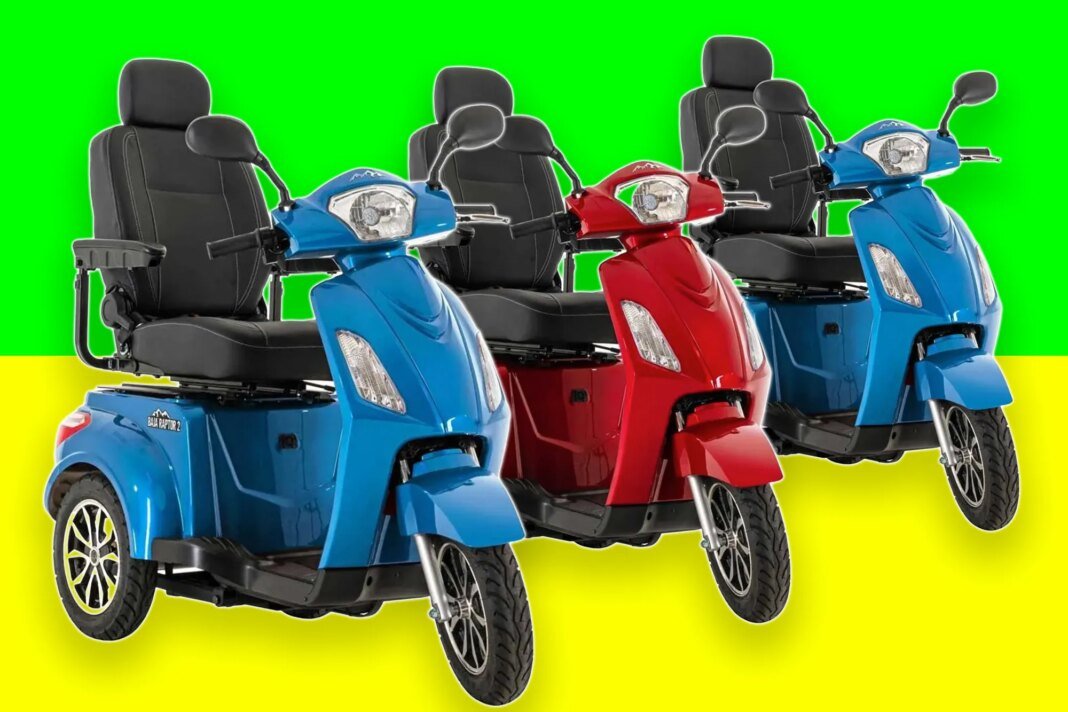


Heightened Regulations for Personal Mobility Scooters in Singapore
Starting June, users of personal mobility scooters (PMS) in Singapore will experience stricter regulations aimed at enhancing safety on public paths. This announcement was made by the Minister of State for Transport, Baey Yam Keng, during the Second Reading of the Land Transport and Related Matters Bill in Parliament. Let’s delve into what these changes entail and their implications for users.
The Need for Regulations
The push for these new regulations stems from growing concerns among residents about safety. Baey highlighted the increasing dangers posed by larger and faster mobility devices, which often weave through pedestrian paths. “We need to restore the original purpose of these devices to serve their intended users,” he stated, emphasizing that the focus should return to aiding those with genuine mobility needs.
Certificate of Medical Need
One of the most notable changes is the requirement for users to possess a Certificate of Medical Need to use a personal mobility scooter. This certificate, available from February 27, can be obtained from licensed doctors and occupational therapists, who will provide both a hard copy and an online submission to the Land Transport Authority (LTA).
Certain groups are exempt from this requirement, including:
- Seniors aged 70 and over
- Beneficiaries of subsidized personal mobility aids from the Seniors’ Mobility and Enabling Fund prior to February 27
- Current and future recipients of subsidized aids from the Assistive Technology Fund
- Individuals assessed under the Ministry of Health’s disability schemes who need assistance with daily living.
Speed Limit Reduction
Alongside the medical certification requirement, the maximum speed limit for personal mobility aids on public paths will be lowered from 10 km/h to 6 km/h. This aims to enhance the safety of pedestrians sharing these paths, making it more manageable for everyone to coexist.
Size and Weight Restrictions
In addition to speed regulations, the new Bill prohibits personal mobility aids exceeding 300 kg in laden weight from being used on public paths and public transport. Also restricted are devices larger than 120 cm in length, 70 cm in width, and 150 cm in height. These changes are part of an effort to ensure that devices are suitable for safe use in shared environments.
Mandatory Registration
The impending regulations will also mandate the registration of all mobility scooters by 2029. This will occur in two phases:
- Phase One: Starting in June, retailers will only be allowed to sell and advertise registered mobility scooters.
- Phase Two: The LTA will establish roving stations at community locations to assist users in registering their devices. Compliance checks will be conducted to ensure that both the device and its user meet the established safety standards.
It’s important to note that beginning January 1, 2029, individuals using non-registered mobility scooters on public paths will face significant penalties, including fines up to $2,000 and possible imprisonment for up to three months.
Combating Fires Related to E-Scooters
Beyond mobility scooters, the Bill also addresses safety regulations surrounding e-scooters. Currently, while riding a non-UL2272 certified e-scooter is illegal, keeping such devices has not been penalized. This is set to change starting in June, when individuals found in possession of non-compliant e-scooters will face device seizure and fines of up to $2,000, with potential prison sentences. Non-individuals could incur fines of up to $4,000.
The urgency of these regulations is supported by statistics showing a concerning number of fires associated with non-compliant active mobility devices (AMDs). Between 2021 and 2025, there were 187 AMD-related fires, with many incidents occurring while devices were charging.
Legislative Framework
The Land Transport and Related Matters Bill seeks to amend several critical pieces of legislation, including:
- The Active Mobility Act 2017
- The Small Motorised Vehicles (Safety) Act 2020
- The Road Traffic Act 1961
- The Land Transport Authority of Singapore Act 1995
These amendments reflect a broader commitment to adapt Singapore’s mobility landscape in response to evolving safety needs.
With the proposed changes, the government aims to strike a balance between enhancing mobility for users who genuinely need it while ensuring the safety of pedestrians and other road users. The transition to a more regulated environment for personal mobility devices marks a significant shift in Singapore’s approach to public safety and traffic management.