
Understanding User Needs Acquisition for Elderly Walking Aids
Observational Study of Elderly Users
To delve deeper into the latent needs of elderly users, a study was conducted observing the behaviors of 16 individuals aged over 60 who rely on walking aids. This analysis aimed to identify the challenges and potential needs these users face during their outings, as represented in the user behavior journey map (Fig. 2).
By scrutinizing this diagram, we can pinpoint pain points that suggest areas for improvement in walker design. From this observational data, we can deduce two main categories of needs: functional (Z1) and psychological (Z2). A comprehensive analysis of the appearance requirements (Z3) is available in Table 1.
User Behavior Journey Map
The user behavior journey map effectively highlights the specific interactions elderly users have with walkers. Identifying pain points, such as difficulty navigating crowded spaces or a lack of support in uneven terrains, helps prioritize essential improvements in walker design. Furthermore, the distinct functional needs (Z1) can be addressed, ensuring that the solutions offered improve the overall user experience.
Overall User Needs Analysis
A crucial aspect of fulfilling the functional and psychological needs of elderly users involves understanding their preferences in the design and appearance of walkers. Advanced analysis through tables reveals additional details on user requirements.
Designing the Kano Questionnaire for Elderly Walking Aids
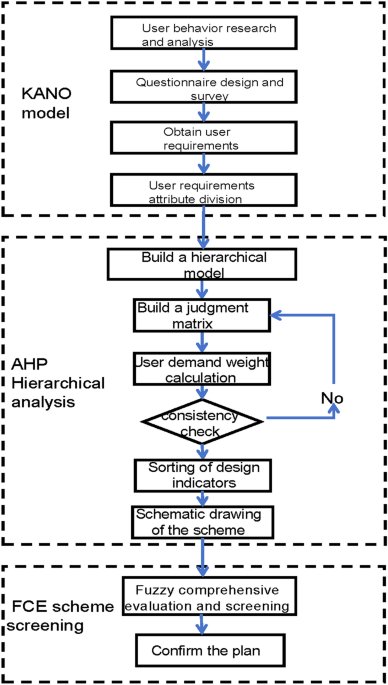
In the quest to enhance walker design, we apply the KANO model to classify and evaluate user needs. This model categorizes needs into five distinct types: Must-be Requirements (M), One-dimensional Requirements (O), Attractive Requirements (A), Indifferent Requirements (I), and Reverse Requirements (R). This classification aids in clarifying how specific features affect user satisfaction.
Crafting the Kano Questionnaire
When designing the Kano questionnaire, unique approaches are taken to gather feedback. Questions addressing satisfied needs are framed positively, while unmet needs are addressed through negative questions. Using a five-point scale for responses helps quantify user satisfaction, allowing for a clearer perspective on must-have features versus those that would enhance the experience but aren’t strictly necessary.
Through rigorous distribution, the questionnaire was administered in two nursing homes in central China, gathering insights from over 93 validated responses. The data collected provides a solid basis for prioritizing walker design features that matter most to elderly users.
Reliability and Validity Analysis of the Questionnaire
Prior to analyzing the data, a reliability check confirmed the questionnaire’s robustness. With Cronbach’s α values exceeding 0.8 for all items, confidence in the results’ consistency is established. Validity analysis using statistical methods confirmed the questionnaire’s effectiveness, yielding a KMO value of 0.764 and significant Bartlett’s test results.
Satisfaction and Dissatisfaction Indices
The study introduces two pivotal indices: the Satisfaction Index (SI) and the Dissatisfaction Index (DSI). SI reflects positive satisfaction, while DSI captures areas needing improvement. Deciding which features hold the most weight for user satisfaction is informed by evaluating these indices.
Hierarchical Analysis of User Needs
Based on insights derived from the Kano questionnaire, essential user needs can be grouped into three main categories: Basic Needs (M), Performance Needs (O), and Excitement Needs (A).
Developing the Hierarchical Structure Model
A detailed hierarchical structure model is created using the Analytic Hierarchy Process (AHP), mapping out three critical layers: the Goal Layer, Criteria Layer, and Indicator Layer. Specific criteria for each design aspect enable the prioritization of essential walker features.
Expert evaluations contributed to this model, ensuring it is rooted in practical needs for elderly users. Scoring and weights assigned by rehabilitation professionals sharpen the focus on components that enhance user satisfaction.
Design Practices and Prototyping
From the consolidated user needs, designers can commence the initial design phase. Several design schemes were developed to cater to the diverse requirements of elderly users.
Proposed Designs
- Scheme 1: A robust all-metal frame guarantees stability, with wooden handles for grip comfort and a storage compartment for personal items.
- Scheme 2: Utilizing lightweight aluminum, this design embraces a minimalist Scandinavian style, making it visually appealing while broad wheels ensure maneuverability.
- Scheme 3: A modular approach allows for patient customization, featuring detachable components for maintenance, stability-enhanced axle design, and integrated safety mechanisms.
Evaluating Design Schemes through Fuzzy Comprehensive Evaluation (FCE)
The FCE method aids in quantifying subjective evaluations of the walker designs. A panel of experts assesses the prototypes against well-defined performance metrics.
Scoring Methodology
Using the guidance of expert feedback, evaluation matrices are established. Each criterion reflects the particular strengths of the design and its appeal to the elderly demographic.
Results and Findings
Final scores from the evaluations starkly illustrate that Scheme 3 stands out as the most favorable option, aligning closely with both user feedback and analytical assessments.
Feasibility Evaluation and Verification
To ensure the designed solutions effectively meet user expectations, standardized questionnaires gauge elderly user experiences. For example, the Questionnaire for User Interaction Satisfaction (QUIS) and other similar tools validate the prototypes against real-world conditions.
Statistical Analysis of Prototypes
Evaluations conducted among 100 elderly participants reflect the prototypes’ varied performance across six key indices: comfort, safety, durability, ease of use, practicality, and appearance design. Notably, Scheme 3 received the highest satisfaction scores across the board, confirming its suitability.
Conclusion
Through meticulous analysis and design validation, this comprehensive approach not only addresses the functional aspects of walker design but also emphasizes the psychological comfort of elderly users, fostering greater independence and enhancing their quality of life. By embracing user-centered design principles, we can continue to evolve walking aids that truly cater to the needs of elderly individuals. The journey toward improved mobility and accessibility is both a challenge and an opportunity to innovate.