
Stricter Regulations for Personal Mobility Scooters in Singapore
In a significant move aimed at enhancing public safety, Singapore will implement stricter regulations for personal mobility scooters starting in June. These changes come as a response to growing public concern over the increasing number of large and fast-moving devices navigating pedestrian pathways, creating potential hazards for walkers and vulnerable populations.
Public Safety Concerns
Minister of State for Transport, Baey Yam Keng, emphasized the mounting safety concerns raised by residents regarding the misuse of mobility aids. Many have expressed that oversized and high-speed devices, often misused as mobility assistance, create an unsafe environment. The push for new regulations is meant to realign these devices with their original purpose, ensuring they serve those genuinely in need.
Mandatory Medical Certification
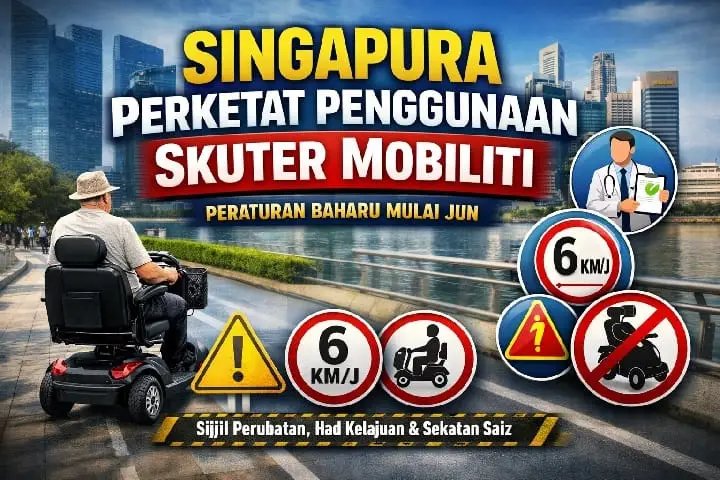
One of the cornerstone proposals of the upcoming regulations is the introduction of mandatory medical certification for mobility scooter users. If the Land Transport Bill passes, officers from the Land Transport Authority (LTA) will have the authority to check this certification. It must affirm a legitimate medical requirement for using a mobility scooter. Certain demographics, such as seniors over 70 and individuals enrolled in government mobility schemes, will be exempt from these requirements.
Certificates will be available starting February 27 through registered healthcare professionals, with a fee schedule to be announced by the LTA.
Reduced Speed Limits
The new framework will also reduce the maximum speed limit for personal mobility aids from 10 km/h to 6 km/h. Authorities believe this reduction will significantly decrease the likelihood of serious injuries in crowded areas like shopping districts and transport hubs. Slower speeds are anticipated to foster better interactions between pedestrians and mobility device users, contributing to overall safety in public spaces.
New Size and Weight Restrictions
Regulations will also introduce stringent size and weight restrictions for mobility scooters. Any device that exceeds a laden weight of 300 kg or measures larger than 120 cm in length, 70 cm in width, or 150 cm in height will no longer be allowed on public pathways or public transport. These limits aim to prevent bulky scooters from obstructing pedestrian flow and emergency access routes.
Compulsory Registration by 2029
From June onward, registration of mobility scooters will become mandatory, with a nationwide rollout scheduled for 2029. Only registered devices will be permitted for sale, and mobile registration stations will assist current users in this transition. Starting January 1, 2029, operating an unregistered scooter may incur fines of up to S$2,000 and potential imprisonment for up to three months.
Fire Safety Concerns
Additional provisions in the bill include a ban on the possession of non-UL2272-certified electric scooters. This follows the alarming statistic of 187 reported fires related to mobility devices between 2021 and 2025. Owners of uncertified devices may face prosecution, fines, and even jail time. Authorities stress that battery safety is a critical issue, particularly in densely populated residential areas.
Balancing Accessibility and Public Safety
The proposed regulations represent Singapore’s effort to strike a balance between improving accessibility for individuals with mobility challenges and ensuring public safety. While these mobility aids are essential for many elderly and disabled users, their improper usage has sown increasing discord in shared urban spaces. The government firmly believes that the updated framework will foster safer urban mobility, bolster public confidence, and guarantee that personal mobility aids can continue fulfilling their intended purpose responsibly.