

Durable Medical Equipment Market Size
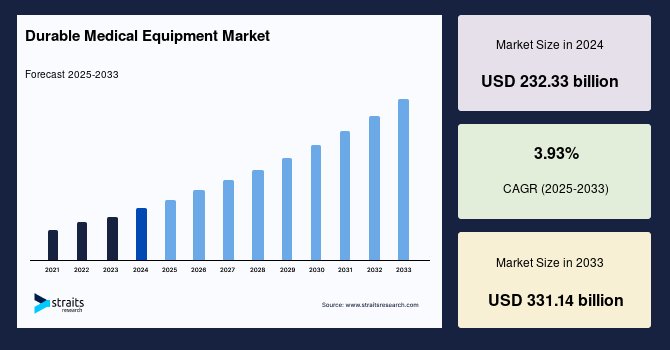
The global durable medical equipment (DME) market is on a significant growth trajectory, with a projected market size of USD 232.33 billion in 2024, forecasted to grow to USD 331.14 billion by 2033, representing a robust CAGR of 3.93% during the period from 2025 to 2033. This growth is driven by multiple factors such as the rising prevalence of chronic diseases, the aging global population, and an increasing inclination towards home-based healthcare approaches.
A pivotal element fostering this market expansion is the ongoing technological advancements in medical equipment. Innovations, such as smart monitoring features in devices like oxygen concentrators and mobility aids, are significantly enhancing patient care. For example, the development of portable and lightweight DME devices has improved usability and accessibility for patients. Investments from both public and private sectors in healthcare infrastructure, along with favorable reimbursement policies, further propel market growth.
Notably, initiatives such as the one launched by HealthCare at Home (HCAH) in collaboration with Aroa Biosurgery in 2024 are indicative of the commitment to enhancing patient outcomes. This initiative focuses on advancing wound care and recovery through medical products designed for soft tissue regeneration, showcasing the evolving landscape of DME aimed at innovative solutions for better health management.
Durable Medical Equipment Market Trends
Integration of Smart Technologies
The integration of smart technologies, including IoT, AI, and telemedicine, is transforming the DME market dramatically. IoT-enabled devices, such as connected glucose monitors and oxygen concentrators, facilitate real-time data collection and remote patient monitoring, allowing healthcare providers to intervene promptly when necessary.
AI-driven analytics enhance patient care by predicting needs and identifying potential health risks early on. Furthermore, telemedicine facilitates seamless communication between patients and healthcare providers, reducing the necessity for hospital visits and improving care coordination. An example of this advancement is the “Home as a Health Care Hub” initiative launched by the FDA in April 2024, which leverages augmented reality and virtual reality to promote health equity and redefine the role of home healthcare.
Rising Demand for Preventive Healthcare
A growing focus on preventive healthcare is another key factor driving the DME market. With increasing awareness about the significance of preventing chronic illnesses, there is a rising demand for home-based medical devices like blood pressure monitors and glucose meters that support regular health monitoring. These products are essential for tracking vital health indicators, thereby empowering patients to manage their health proactively.
Healthcare wearables, such as fitness trackers, are gaining traction, underlining their role in enhancing global health outcomes. A report released by WIPO in June 2024 emphasized the potential of these devices to assist in managing chronic diseases, underlining the market’s pivot towards preventive care approaches.
Market Restraining Factors
High Costs of Durable Equipment
Despite the positive outlook, the DME market faces significant barriers, with high upfront costs being a critical challenge. The prices of durable medical equipment can be prohibitive, especially for individuals in low-income communities or healthcare facilities. Whether it’s a manual wheelchair ranging from $100 to $500 or an electric wheelchair costing between $1,400 to $13,000, these high expenses deter many potential users and delay essential treatments.
This financial strain is particularly pronounced in emerging markets, where healthcare infrastructure is often underdeveloped, and government subsidies for medical equipment may be limited. The implications are dire, as many patients face barriers to accessing necessary medical devices, ultimately affecting their health outcomes.
Market Opportunities
Rising Demand in Emerging Economies
Emerging economies represent a significant opportunity for growth in the DME sector. As healthcare systems in these regions develop, the demand for reliable and cost-effective equipment to manage chronic diseases is escalating. Factors such as rapid urbanization, population growth, and increased government investment in healthcare infrastructure are significantly contributing to this demand.
For instance, healthcare spending in South Asia surged by over 20% between 2020 and 2023, particularly in countries like India and Indonesia, which are prioritizing advancements in medical technologies. The rise of the middle class in these regions also showcases a growing willingness to invest in advanced healthcare solutions, indicating a promising market landscape.
Expanding Middle Class
As witnessed in Brazil, an aging population alongside increasing disposable income generates greater demand for durable medical equipment for home use, such as CPAP machines and electric wheelchairs. This interplay of economic development and health consciousness is set to enhance the uptake of medical devices, thereby supporting market growth.
Regional Insights
North America
North America, with a 40.23% market share, commands the largest segment of the global DME market. The region’s demand is fueled by a rapidly aging population and a strong preference for home care devices to manage chronic diseases effectively. Known for its robust healthcare infrastructure, North America is home to leading DME companies that continually innovate and provide high-quality products.
Asia-Pacific
The Asia-Pacific region is rapidly emerging as a significant player in the DME market. With countries such as China, Japan, and India contributing to substantial growth, factors like an aging demographic and increased incidence of chronic diseases are driving upward demand for mobility aids and life-supporting devices. Government initiatives across emerging economies are crucial in making advanced medical equipment more accessible.
Europe
In Europe, countries like Germany, the UK, and France are witnessing notable growth in the DME market, driven by innovation and supportive reimbursement policies. Germany’s healthcare innovation and the UK’s embrace of home healthcare technologies emphasize the region’s dedication to improving patient care through advanced DME solutions.
Product Insights
The global market is prominently led by the monitoring and therapeutic devices segment. An increasing prevalence of lifestyle-related conditions creates a consistent requirement for real-time health monitoring. Wearable technologies, such as smartwatches and fitness bands, have gained popularity for offering insights into health metrics like heart rate and oxygen levels, promoting early detection of potential health issues.
End-User Insights
Hospitals represent the largest share in the DME market, being primary centers for chronic illness management. The frequency of hospital visits necessitated by conditions like diabetes and cardiovascular diseases signifies the essential role these facilities play. Access to advanced medical devices and specialized care ensures that hospitals remain vital in delivering effective health solutions, thereby reinforcing their dominance in the market.
Company Market Share
Leading companies in the DME sector engage in strategic collaborations, acquisitions, and partnerships to bolster their market presence. This strategy enables them to integrate advanced technologies into their product lines and cater to the diverse needs of patients globally, facilitating sustained growth.
Joerns Healthcare emerges as a notable provider focusing on improving patient care with products like hospital beds and patient-handling equipment. The company’s initiative to sell its rental service network in select U.S. states in 2024 highlights its strategic positioning in the market.
Key Players
- Invacare Corporation
- ArjoHuntleigh
- Stryker Corporation
- Hill-Rom Holdings, Inc.
- Drive Medical
- GF Health Products, Inc.
- Sunrise Medical
- Medline Industries, LP
- Carex Health Brands
- Becton, Dickinson and Company (BD)
- General Electric Company
- Medtronic PLC
- Compass Health Brands
- Getinge AB
- ResMed Inc.
Recent Developments
-
November 2024: Sunrise Medical announced the launch of the QUICKIE QS5 X, a lightweight folding wheelchair featuring advanced technology to enhance portability and usability.
-
April 2024: Invacare launched the Move for Mobility initiative, partnering with Free Wheelchair Mission to provide mobility solutions to underserved communities globally.
-
September 2024: Arjo expanded its diagnostics and rental solutions portfolio by acquiring Tech-Med and GerroMed, enhancing its service offerings and commitment to patient care.
As the DME market continues to evolve, the trends and innovations highlighted in this article underscore the dynamic landscape that holds transformative potential for health management across the globe.