

Overview of the Home Rehabilitation Products and Services Market
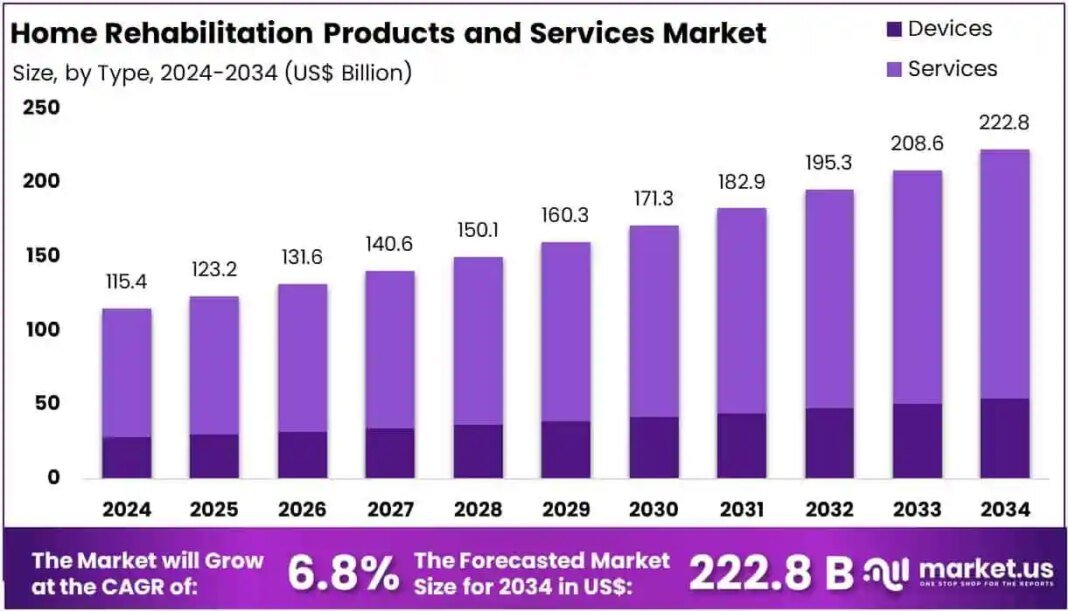
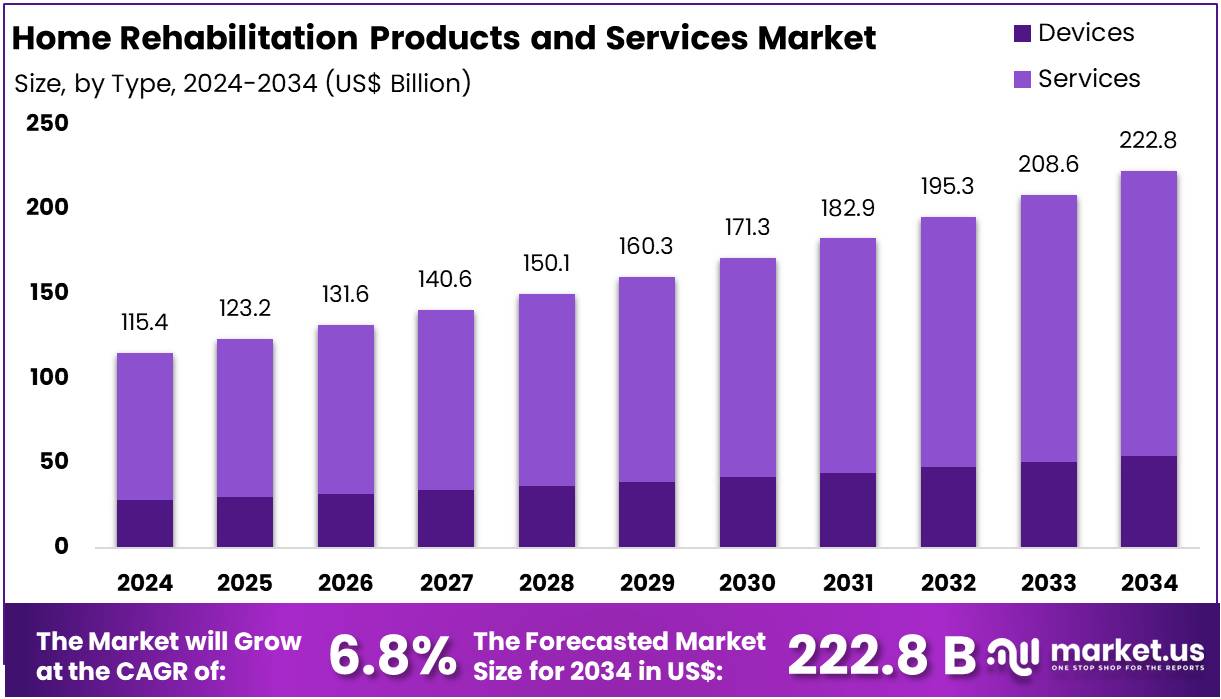
New York, NY – Aug 07, 2025: The global home rehabilitation products and services market is poised for impressive growth, projected to escalate from US$ 115.4 billion in 2024 to US$ 222.8 billion by 2034, showcasing a CAGR of 6.8%. North America currently dominates this landscape, holding a significant share of 37.2%, valued at approximately US$ 44 billion. This surge in demand is largely driven by an aging population, an increase in chronic diseases, and a strained healthcare system. As patients increasingly seek cost-effective recovery options, home-based care is gaining traction, making accessibility and affordability pivotal elements shaping global market dynamics.
Rise in Rehabilitation Needs
The need for rehabilitation services has escalated sharply, with the World Health Organization (WHO) noting that around 2.41 billion individuals are in need of rehabilitation—a staggering 63% increase since 1990. Major drivers include demographic shifts towards aging and surges in injuries and chronic conditions. Specifically, musculoskeletal disorders impact nearly 1.71 billion people worldwide, encompassing issues like sprains, fractures, and ligament injuries. These prolonged conditions necessitate extended care, hence driving the demand for innovative home-based solutions. Consequently, assistive products and in-home therapies are essential for improving patients’ quality of life and promoting long-term independence.
Technological Innovations Transforming Rehabilitation
Technological advancements are reshaping the home rehabilitation arena. Digital rehabilitation (DR) tools are facilitating smoother transitions for patients from hospitals to home care. For instance, a study published in PubMed Central revealed that home physiotherapy notably reduced pain by 52% and disability by 43% in knee osteoarthritis patients within a month. The acceleration of telehealth tools post-COVID-19 has further reinforced this trend, allowing more patients to access effective rehabilitation resources while minimizing costs and hospitalization durations. These tools not only promise better recovery outcomes but also push healthcare systems towards more efficient service delivery.
Economic Impact of Musculoskeletal Injuries
The economic burden associated with musculoskeletal injuries is enormous. In the U.S. alone, approximately 17 million ligament injuries occur annually, accounting for 50% of all musculoskeletal cases—a situation costing the healthcare system over $40 billion every year. High incidence rates for injuries, including ankle sprains (429.4 cases per 100,000) and distal radius fractures (212.0 cases per 100,000), underscore the urgent need for cost-efficient home rehabilitation solutions. Patients increasingly prefer recovering at home with tailored rehabilitation equipment, thereby alleviating hospital pressures and bolstering long-term recovery strategies.
Home Rehabilitation After Joint Replacement Surgeries
The demand for home rehabilitation services also spikes due to the rising number of joint replacement surgeries. More than 600,000 knee replacements take place annually in the U.S., with projections suggesting that this number could exceed 3 million by 2030. In 2018, 85% of knee and 88% of hip surgery patients were discharged to their homes. Governments and global health organizations emphasize rehabilitation across all care spectra, yet access disparities persist—only 3% of individuals in low-income countries have access to necessary assistive products compared to 90% in high-income regions. This gap presents substantial growth opportunities in the international home rehab market.
Key Market Insights
Current Market Situation
- 2024 Market Value: US$ 115.4 billion
- Projected Value by 2034: US$ 222.8 billion
- Services Market Share: Over 75.7% in 2024, attributed to heightened interest in in-home professional rehabilitation care.
Consumer Demographics
- Elderly Market Share: 62.2% in 2024, mainly due to chronic illnesses and mobility issues tied to aging.
- Post-Surgical Rehab Demand: Represents 30.6% of the market as home recovery becomes the norm for surgeries.
Regional Analysis
North America is the frontrunner in the home rehabilitation market, capturing 37.2% of market share in 2024 valued at US$ 44 billion. Contributing factors include the high prevalence of chronic health conditions and the aging population, with both elements necessitating ongoing home care. Increased adoption of technology like smart therapy aides and favorable reimbursement policies further bolster this tremendous growth.
Market Segmentation Overview
Type Analysis
Services dominate the market with more than 75.7% share. The rising demand for physical and occupational therapy, along with the benefits of telerehabilitation, reinforces this trend, allowing patients to receive care comfortably at home with reduced recurrence of hospital visits.
Patient Type Analysis
In 2024, the geriatric segment accounted for over 62.2% share of home rehabilitation needs. This demographic is often characterized by a variety of chronic debilitating conditions that require sustained rehabilitation support.
Application Segment
The post-surgical rehabilitation category leads the application segment, comprising 30.6% of the market due to the increasing number of orthopedic procedures.
Key Players in the Market
Leading companies in the home rehabilitation sector include Medline Industries and Stryker Corporation. Medline offers an extensive range of durable medical equipment while Stryker focuses on advanced orthopedic solutions. Other noteworthy players such as Prism Medical Ltd. and DJO Global contribute innovative products and personalized services.
Major Players
- Medline Industries
- Stryker Corporation
- Prism Medical Ltd.
- DJO Global
- Invacare Corporation
Emerging Trends in Home Rehabilitation
Shift Toward Home-Based Recovery
There is a noticeable trend of patients preferring recovery at home, leading to a heightened demand for home-use rehabilitation tools. Patients report a significant comfort level recovering in familiar surroundings, yielding both emotional benefits and cost savings.
Tele-Rehabilitation Growth
Technology’s role in therapy delivery continues to evolve. Tele-rehabilitation connects patients with therapists via online platforms, making therapy accessible from home—particularly advantageous for individuals in remote areas.
Focus on Aging Population Care
The global demographic shift towards an aging population necessitates increased attention to home rehabilitation services. Products designed specifically for the elderly help maintain mobility and autonomy, fostering positive recovery experiences.
Rise of Smart and Wearable Devices
Innovative smart devices monitor rehabilitation progress and help customize therapy regimens, enhancing safety and motivating patients through real-time feedback and personalized care plans.
Customized Therapy Plans
Personalization in treatment approaches is becoming increasingly prevalent, as tailored rehabilitation plans are shown to improve patient outcomes significantly. Digital platforms facilitate this customization, improving care satisfaction and adherence.
User-Friendly Rehabilitation Equipment
The focus on ergonomic and intuitive designs in rehabilitation equipment is making at-home recovery more efficient and accessible, particularly for older adults or individuals with mobility limitations.
Use Cases of Home Rehabilitation
Post-Surgery Recovery at Home
Key for managing recovery post-surgery, home programs often integrate simple exercise tools which play a vital role in rehabilitation strategies.
Stroke Rehabilitation
Long-term rehabilitation post-stroke favors home settings where patients can access therapeutic support while feeling secure and comfortable.
Chronic Pain and Arthritis Management
Home care solutions targeting chronic conditions offer effective pain relief, enhancing patients’ ability to maintain daily activities independently.
Pediatric Rehabilitation
Home-based rehabilitation proves beneficial for children with disabilities, encouraging family involvement and enabling therapeutic activities within a trusted environment.
Geriatric Mobility Support
Home rehabilitation tools serve to maintain and improve mobility in aged adults, creating safer living conditions that promote independence.
Sports Injury Rehabilitation
Athletes recovering from injuries capitalize on home rehabilitation resources to complement traditional therapy, ensuring quicker returns to active lifestyles.
By maintaining a keen eye on emerging trends and core needs within this rapidly evolving market, stakeholders can navigate the complexities of home rehabilitation effectively. The integration of innovative technologies and personalized care will be pivotal in shaping the future of rehabilitation services globally.