

Overview of the Electric Wheelchair Market
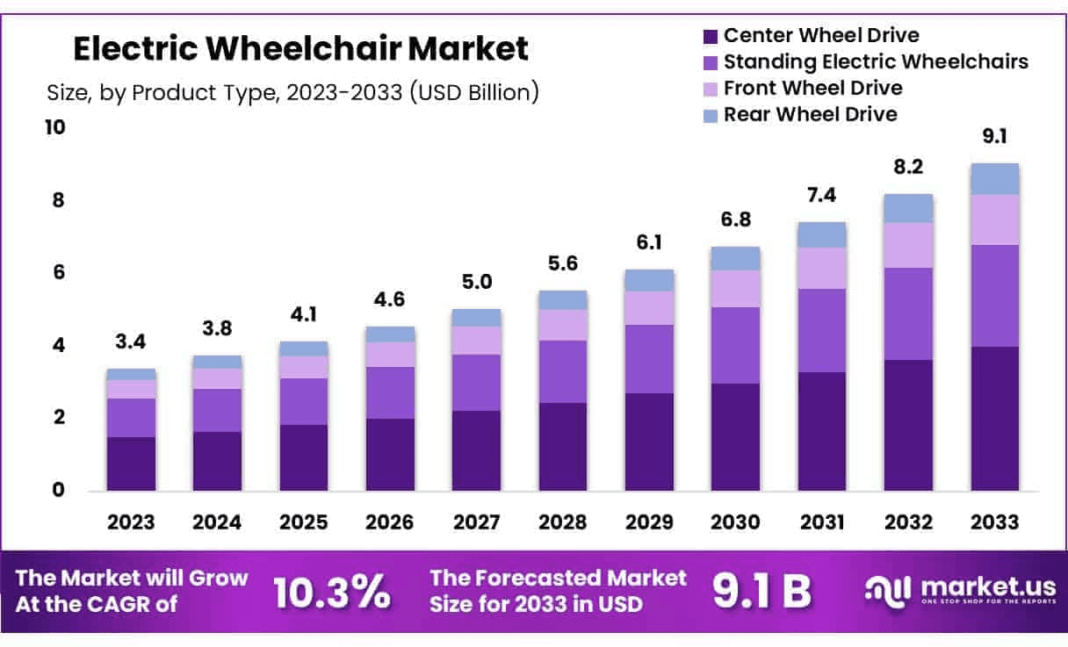
New York, NY – Jan 05, 2026 – The Electric Wheelchair Market is set to grow significantly, with projections indicating it will be worth around USD 9.1 billion by 2033, rising from USD 3.4 billion in 2023. This impressive growth rate translates to a compound annual growth rate (CAGR) of 10.3% during the forecast period from 2024 to 2033. This expansion reflects a growing focus on improved mobility solutions and enhanced quality of life for people with limited mobility, particularly the elderly and those living with disabilities.
Market Growth Drivers
The rising prevalence of age-related mobility disorders, spinal cord injuries, and chronic conditions like arthritis drives the demand for electric wheelchairs. Additionally, the increasing geriatric population, particularly in both developed and emerging markets, has contributed significantly to the adoption rates of these mobility aids. Technological advancements—such as lightweight materials, improved battery performance, and sophisticated control systems—are also making electric wheelchairs more appealing.
Healthcare infrastructure is witnessing significant development, bolstering market entry. Favorable reimbursement policies across various countries further support the integration of electric wheelchairs within healthcare systems, leading to enhanced patient mobility and long-term care outcomes.
Regional Insights
North America
North America currently dominates the electric wheelchair market, accounting for 39.4% of the overall revenue share in 2023. This can be attributed to robust healthcare systems, high public awareness, and strong technological advancements. The prevalence of mobility-related disabilities—in part due to an aging population and road accidents—also propels demand within the region. Reimbursement frameworks, including Medicare and Medicaid, have made electric wheelchairs more financially accessible for users.
Asia-Pacific
On the other hand, the Asia-Pacific region is poised for rapid growth, with expectations for the highest CAGR in the coming years. This growth is attributed to rising healthcare expenditures, technological improvements in medical facilities, and an expanding elderly demographic. Governments in the region are increasingly implementing initiatives to enhance healthcare accessibility, directly influencing the demand for electric wheelchairs.
Key Market Statistics
- Global Demand: Approximately 1.85% of the global population requires a wheelchair, showcasing a stable demand for mobility solutions.
- Access Disparities: While over 95% of individuals in developed countries with mobility needs can access a wheelchair, less than 10% in developing regions can do the same. This highlights significant disparities and unmet needs.
- Annual Demand Growth: The world requires about 3,500 additional wheelchairs daily, equivalent to 145 units per hour.
- Use in the U.S.: The adult wheelchair usage rate in the United States stands at 2.3%, approximately 5.5 million users nationwide.
Emerging Trends
Smart Technologies
The electric wheelchair market is increasingly influenced by smart technologies. Manufacturers are embedding sensors, cloud computing, and mobile connectivity into products to enhance user experience. Features like collision avoidance and real-time tracking ensure increased safety, advocating for greater independence.
Customization
Users are demanding more personalized options, leading to the rise of electric wheelchairs that can adapt to individual needs. Adjustable supports, varied seating configurations, and modifiable driving controls are becoming standard, allowing for a tailored user experience.
Rehabilitation Integration
Rehabilitation-focused designs are changing the landscape of mobility aids. Products like the Lever-Actuated Rehabilitation and Ambulation (LARA) chair incorporate physical therapy into mobility, promoting rehabilitation for users recovering from strokes and other injuries.
Global Research Collaboration
The pace of innovation is accelerating due to collaborative international research efforts. Institutions across North America, Europe, and Asia are contributing to new developments in intelligent mobility systems, promising more advanced solutions for users.
Sustainability and Cost Optimization
Sustainable practices are becoming more significant within the industry, with manufacturers focusing on reducing production costs while ensuring high-quality performance. This emphasis on sustainability can open market access for a broader range of users.
Artificial Intelligence and Robotics
The incorporation of AI and robotic systems is set to revolutionize electric wheelchairs. Autonomous path planning, obstacle recognition, and adaptive navigation will enhance user experience, making these devices more intuitive and user-friendly.
Use Cases
Electric wheelchairs serve multiple purposes across various environments.
Home Accessibility
When used in residential settings, modifications may include installing ramps, widening doorways, and ensuring strategic placement of switches and outlets to make movement easier and safer.
Rehabilitation
In rehabilitation settings, electric wheelchairs can aid stroke patients by incorporating therapeutic functions into daily mobility, thus facilitating active limb engagement and recovery.
Public Environments
Electric wheelchairs are designed for varied terrains and situations, making them suitable for professional and public settings, thus enabling individuals to engage actively in social and work activities.
Elderly Support
For older adults, electric wheelchairs are essential for maintaining independence. They significantly reduce the physical exertion required to navigate daily activities, thereby improving overall quality of life.
Frequently Asked Questions
Who typically uses electric wheelchairs?
Electric wheelchairs are primarily used by older individuals and those with mobility impairments due to various medical conditions such as spinal injuries and chronic disabilities.
What are the key benefits of electric wheelchairs?
These devices significantly enhance user independence, reduce reliance on caregivers, and improve quality of life through customizable features and advanced navigation capabilities.
Which region leads the electric wheelchair market?
North America is the current leader due to extensive healthcare facilities, strong insurance coverage, and high awareness surrounding mobility solutions.
Why is Asia Pacific expected to grow rapidly?
With increasing healthcare investments and evolving medical infrastructures, Asia Pacific is witnessing a significant rise in demand for electric wheelchairs, particularly among its aging population.
How does insurance coverage impact electric wheelchair adoption?
Insurance plays a vital role in accessibility. With many policies covering the costs of electric wheelchairs, it alleviates the financial burden on users.
What technological trends are influencing the market?
Innovations in lightweight materials, smart controls, and AI-driven features are primarily shaping user interest and market growth.
The future of the electric wheelchair market looks promising, underpinned by demographic shifts, consistent technological advancements, and growing awareness of the necessity for mobility aids. The interplay of regional growth, innovative product designs, and supportive healthcare policies will shape the trajectory of this essential market.