
Exploring the Different Types of Mobility Scooters
Mobility scooters have become essential tools for many individuals, providing a means of transportation that enhances independence and accessibility. With a variety of options available, it’s important to understand the distinct types of mobility scooters that cater to different needs. Here, we’ll delve into the different categories of mobility scooters, highlighting their unique features and benefits.
Travel Scooters
Travel scooters are typically the most compact and lightweight options on the market. Designed specifically for ease of transport, these scooters can be easily disassembled, allowing them to fit snugly in a car trunk. They generally weigh less than their larger counterparts, making them ideal for individuals who need a portable mobility solution.
When considering a travel scooter, it’s important to note the range it offers. “Smaller scooters have a [travel] range of 8 to 10 miles,” explains mobility expert Black. This distance signifies how far a person can travel on a single battery charge, making travel scooters perfect for short errands, family visits, or day trips.
Foldable Scooters
Foldable scooters offer added versatility for users who frequently find themselves on the go. These scooters can be easily taken apart and folded, making them convenient for various settings, such as malls, parks, or even while relocating.
When shopping for a foldable scooter, pay close attention to its weight—particularly the heaviest part. If it’s too heavy, it may become cumbersome to lift into a vehicle. Most small to medium-sized scooters come equipped with solid tires, enhancing their durability and reducing the hassle of dealing with flats.
Large Scooters
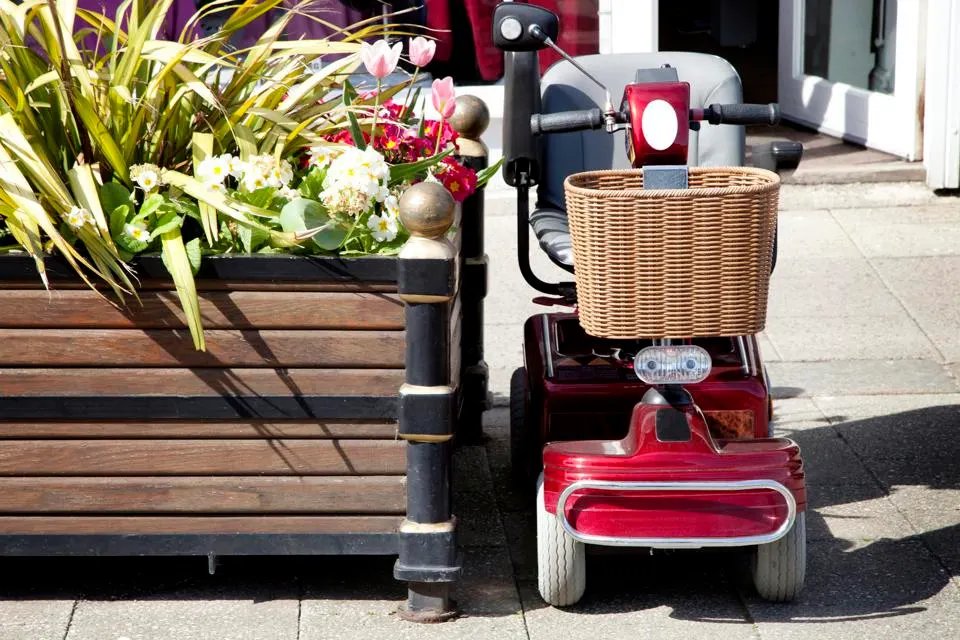
For individuals with specific size needs, a medium- to large-sized scooter is often the best choice. As Black notes, these larger scooters typically feature four wheels and are designed for versatility across different terrains. This means users can feel confident navigating both city streets and rougher paths alike.
One of the standout features of large scooters is their impressive battery life, often allowing travel distances of up to 40 miles before requiring a recharge. This capability is particularly beneficial for users who need to cover longer distances on a regular basis. Additionally, large scooters boast a higher weight capacity, essential for ensuring safety. “The rule is you need to weigh at least 10% less than the weight capacity,” Black advises.
Heavy-Duty Scooters
For those who require even more robust support, heavy-duty scooters are the top-tier option. With the ability to carry substantial weight and travel greater distances on a single charge, these scooters are engineered for performance.
Heavy-duty models often have a ground clearance of 3 to 5 inches, though some can sit even higher, offering ease of travel over rough terrain. This feature not only enhances stability but also allows users to navigate diverse environments without concern.
3-Wheel Scooters vs. 4-Wheel Scooters
When deciding between three-wheel and four-wheel scooters, personal preferences and needs come into play. A four-wheel scooter generally provides a more stable experience, making it suitable for users who prioritize balance. However, some individuals, particularly those with longer legs, may find a three-wheel scooter more comfortable due to its design.
Black points out a key difference: “A four-wheel scooter has a fender across the front, which limits someone’s ability to stretch their legs out.” In contrast, a three-wheel scooter’s single center wheel allows for more freedom of movement, making it potentially more accommodating for those who need to adjust their leg position frequently.
With a variety of options available, understanding the unique features and benefits of each type of mobility scooter can help users make informed decisions that enhance their mobility and convenience. Whether you are looking for something compact, versatile, or heavy-duty, there’s a scooter that meets your specific needs.