
Advocating for Mobility Scooters in B.C.’s Bike Lanes
Advocates for seniors and individuals with disabilities in British Columbia are urging the province to make it legal for mobility scooters to operate in bike lanes. This push highlights the ongoing quest for equality and accessibility within the fabric of society.
The Call for Equal Access
Susan Simmons, a disability advocate affiliated with the organization It’s Your Right, succinctly articulates the sentiment: “We want equal access to everything; we are part of society.” Simmons emphasizes that access to public amenities like bike lanes must be universal, advocating for the rights of people with disabilities to enjoy the same facilities as their able-bodied counterparts.
Current traffic regulations in B.C. only permit e-bikes and traditional bicycles in bike lanes, leaving other users in a gray area without clear guidelines. The need for inclusivity in transportation options becomes even more pressing as advocates work toward meaningful change.
A Legislative Gap
Victoria city councillor Jeremy Caradonna points out a significant disconnect in regulations. Although the province has amended B.C.’s Motor Vehicle Act to accommodate mobility aids, no regulations have been established to enforce this change. Caradonna calls for clarity in the rules governing mobility scooters, insisting, “What’s happened is the technology has advanced so quickly that the law just can’t keep up with it.”
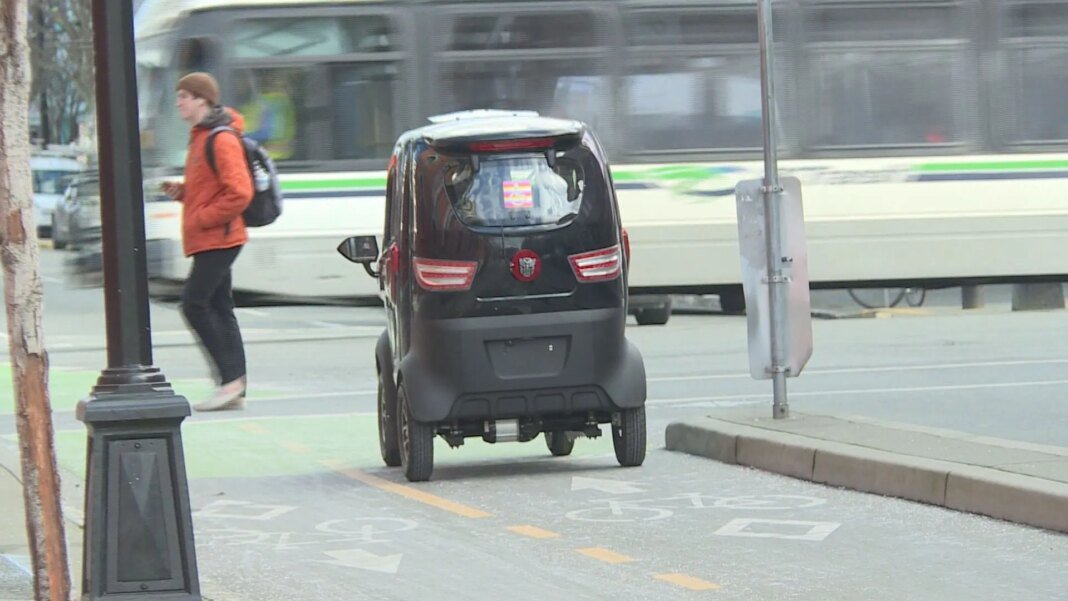
As it stands, people using mobility scooters are technically considered pedestrians and are required to use sidewalks, a stipulation that poses challenges for many.
Inaccessible Sidewalks
Current sidewalk conditions in Victoria further complicate matters. Simmons explains that not all sidewalks are designed with universal accessibility in mind. Obstacles, such as telephone poles and uneven surfaces, can make navigating sidewalks impractical for those on mobility scooters. She argues, “There are going to be some people who want to use a scooter and be in a bike lane to move quickly, and others in a wheelchair or with a walker who are going to be on the sidewalk with a friend.”
These experiences underscore the inadequacies of existing infrastructure and highlight the need for specialized solutions.
Government Standpoint
B.C. Transportation Minister Rob Fleming reinforces that mobility scooter users are still classified as pedestrians under current law, which continues to restrict their use of bike lanes. However, he acknowledges the need for clearer rules regarding this matter: “We need clear rules of the road. We are open to any and all ideas.” Fleming’s openness suggests a willingness to consider options that could benefit mobility scooter users.
Future Pressures for Change
Added pressure is mounting as the Capital Regional District plans to vote on a motion to engage the provincial government on this pressing issue. Similarly, Victoria city council is preparing a motion advocating for greater inclusivity in bike lane access for all community members.
Caradonna encapsulates this sentiment well: “We want everyone on our streets to feel included in these lanes. They’re for everyone.” The upcoming council discussions and votes signal a growing commitment to re-evaluating and possibly transforming the legal framework guiding transportation access in British Columbia.
In Summary
The advocacy for mobility scooters in B.C.’s bike lanes embodies a larger conversation about accessibility, inclusion, and the rights of all members of society to engage freely within their communities. As discussions advance, the hope remains for a future where all individuals can navigate urban environments without barriers.