
Project Information
As life expectancy rises, an increasing number of older adults are grappling with orthopedic conditions that impact their mobility and independence. In light of this growing need, it’s disheartening to find that most rehabilitation tools fail to cater to elderly users. Complex interfaces, a reliance on digital technology, and clinical aesthetics often push those in need further away from the support they require.
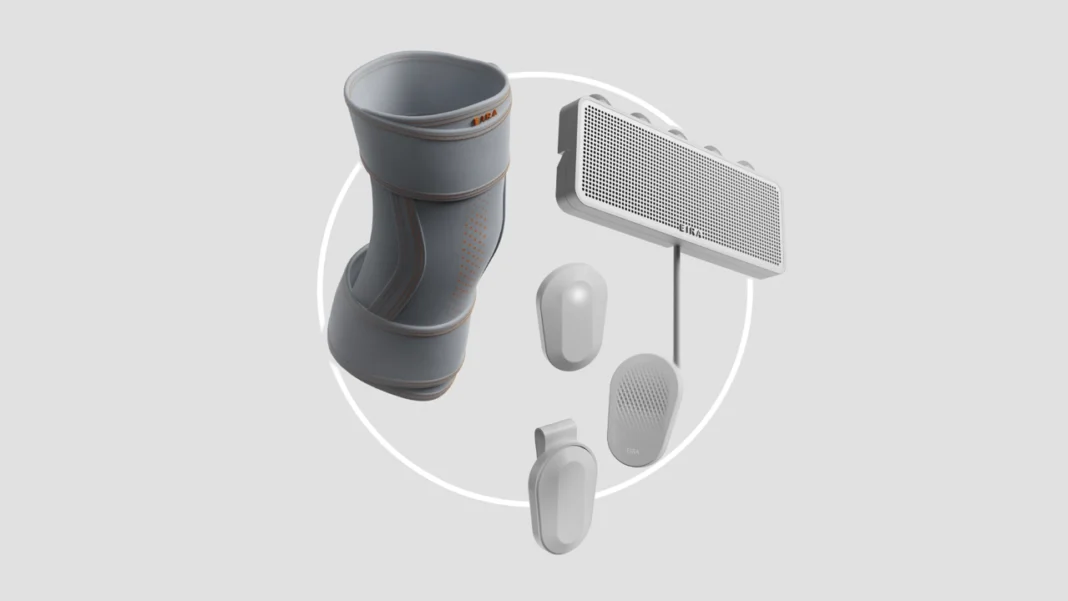
EIRA emerges as a human-centered rehabilitation system specifically designed to bridge this gap. Developed in collaboration with MT-FoU at Norrlands University Hospital, EIRA serves older adults recovering from surgeries or injuries that affect their gait and balance. By merging a wearable movement sensor with a companion charging dock that offers calming, analog feedback, EIRA empowers users to stay engaged in their rehabilitation at home, supported by healthcare professionals and family members.
One of EIRA’s most significant innovations is its capacity for connected care. Movement data is securely shared with healthcare providers, allowing for remote monitoring and personalized adjustments to therapy. This unique feature not only fosters patient empowerment but also equips clinicians with the tools necessary for ongoing, effective follow-up care, transcending the conventional boundaries of clinical settings.
Methods
The project’s foundation is rooted in a human-centered, research-driven design approach. This approach is grounded in ethnographic fieldwork, expert interviews, iterative prototyping, and co-creation methodologies.
Field research took place across three clinical contexts: a geriatric rehabilitation ward, a neurorehabilitation center, and a sports medicine clinic. These observational visits unveiled systemic challenges—especially the lack of follow-up care post-discharge, poor adherence to home therapy programs, and the emotional toll of solitary recovery. Patients often exited hospitals equipped only with printed instructions, leaving them in a state of frustration, isolation, and, in many cases, abandonment of their rehabilitation efforts.
Engaging in expert interviews with physiotherapists, occupational therapists, and rehabilitation researchers provided deeper insights. Many professionals expressed a pressing need for simple yet motivating tools tailored for older adults who may struggle with digital literacy. Their feedback underscored the importance of creating solutions that facilitate better patient monitoring remotely, which could revolutionize tracking progress and adjusting rehabilitation tactics accordingly.
User interviews with elderly participants (aged 72–81) revealed feelings of uncertainty and shame when unable to complete exercises. They voiced a collective longing for tools that evoke familiarity, trust, and emotional comfort. Many considered screen-based solutions as cold or overwhelming, further illustrating the need for a warmer, more emotionally supportive approach to rehabilitation.
Conducting a thorough technology analysis enabled the team to chart the existing landscape of rehabilitation solutions, which included various wearables, apps, and robotic systems. Although many exhibited technical sophistication, they frequently fell short in accessibility and usability, often failing to fit seamlessly into daily routines.
In galvanizing creative insights, ideation workshops brought together clinicians, older users, and fellow designers. The discussions focused on translating research into tangible design opportunities, centered around themes like motivation, clarity, emotional reassurance, and analog feedback. Together, these participants brainstormed ways to make therapy more intuitive and engaging, embedding it naturally into everyday life.
Subsequent prototyping sessions involved testing initial designs with older users, focusing on aspects like strap comfort, feedback mechanisms, and the role of the charging dock. This iterative feedback loop yielded important refinements, ensuring that EIRA functioned effectively while remaining emotionally engaging.
Result
The culmination of this meticulous process is EIRA—a rehabilitation support system that harmoniously integrates physical simplicity with digital intelligence, delivering an experience that is emotionally attuned for older users while equipped with practical features for clinicians.
Key components
- Wearable Sensor: Discreetly embedded within a textile pocket, this motion sensor is designed to be worn just above the knee using a soft, adjustable strap. This thoughtful placement ensures reliable data collection while prioritizing comfort and user independence, utilizing velcro for ease of use even among those with reduced motor skills.
- Charging Dock: Designed to aesthetically blend in as a calming home object, this dock communicates user status and progress through soft, ambient light. When docked, the sensor automatically transfers data, ensuring a seamless connection between the user and their healthcare team.
- Remote Connectivity: This feature allows clinicians to access movement data, facilitating patient progress tracking and bespoke rehabilitation plan adjustments. This ensures better continuity of care following hospital discharge, promoting ongoing support.
The system’s design philosophy is anchored in six fundamental principles
- No Instructions Required: Users can intuitively operate EIRA through its form and feedback mechanisms.
- Be Calm, Not Smart: The interaction demands little cognitive energy, relying on low-tech engagement rather than screen reliance.
- Blend Into Daily Life: The design language is warm and home-friendly, integrating seamlessly into users’ environments.
- Minimize Cognitive and Physical Load: EIRA is designed for effortless use, maximizing user comfort and usability.
- Respect the Analog: The system minimizes unnecessary digital barriers, fostering a user-friendly experience.
- Build Trust Through Clarity: EIRA offers gentle, reassuring signals, enhancing user confidence.
EIRA transcends the conventional notions of rehabilitation tools; it transforms the experience from a burdensome task into a subtle, integrated part of everyday life. It nurtures autonomy, builds confidence, and makes users’ progress visible in natural and reassuring ways.
Designed specifically for those often overlooked by the digital age, EIRA empowers elderly users to follow their rehabilitation on their own terms. At the same time, it keeps healthcare professionals connected, creating an inclusive, sustainable model for home-based care.