

Aging in Place: Empowering Seniors to Stay at Home
A growing number of seniors are choosing to live safely in their own homes rather than moving to assisted living facilities. This phenomenon is known as aging in place, and it’s becoming increasingly popular as it allows older adults to maintain their independence while surrounded by familiar comforts. For many families, this decision brings both emotional and logistical challenges, especially for informal caregivers who often shoulder additional responsibilities to make this choice viable.
The Journey of the Sfugaras Family
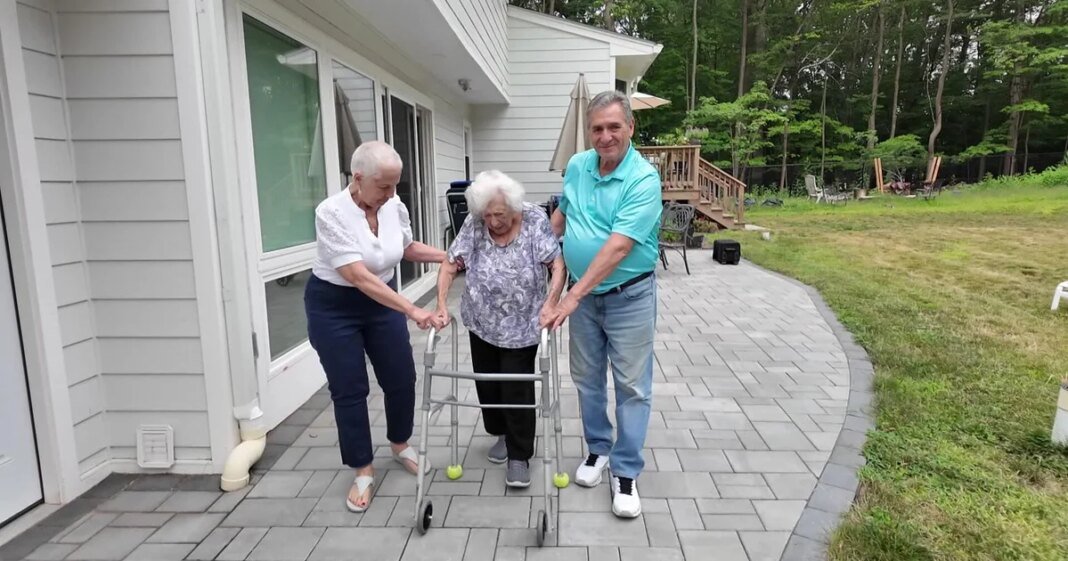
In Franklin Lakes, New Jersey, 96-year-old Fay is navigating the complexities of Alzheimer’s disease while living with her son, Steve Sfugaras, and daughter-in-law, Pam, who has her own health challenges as a cancer survivor. Steve reflects on the difficulty of witnessing his mother’s gradual decline, stating, “She was always a very independent woman herself. It was very difficult watching the deterioration.”
Steve and Pam reported a significant improvement in their family dynamic after remodeling their home to include a senior suite designed specifically for Fay. With features that promote safety, they implemented a fall-proof plan in every room, which greatly alleviates some of the caregiving stresses.
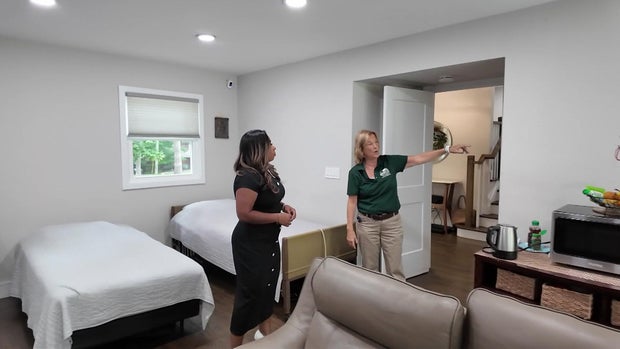
Caption: Linda Pollock points out some of the aging in place modifications in the Sfugaras home. Credit: CBS News New York
Linda Pollock, the owner of North Jersey Home Maintenance Group specializing in aging in place renovations, noted an increase in inquiries from families who wish to modify their homes. Small adjustments, like installing a wheelchair-accessible front door or adding handrails, make a significant difference. “They really do not want to leave their homes. All their memories are there, and they cherish their surroundings,” she observes.
The Emotional Weight of Caregiving
Despite the advantages of keeping Fay at home, the burden on Steve and Pam is palpable. Balancing caregiving responsibilities with their jobs and the needs of their own children can be overwhelming. Pam candidly states, “It’s a big decision, and one that should not be taken lightly.” The couple acknowledges the loss of privacy that comes with having a senior family member living under the same roof, alongside the challenge of coordinating medications and doctor’s visits.
However, there are heartwarming moments, like birthday celebrations where everyone gathers, ensuring that Fay is surrounded by family. “Seeing her when we have a party, or a birthday, and she’s with all the family and the kids, I could see she’s very happy,” Steve expressed.
Pam adds, “It might make it easier when the end comes that we have no regrets.”
Navigating Safety Concerns: The Risk of Falls
Safety is usually a top concern for those aging in place. According to New York’s Office for the Aging, around 81% of older adults reside in their homes. Real estate trends are reflecting this need; many multi-family homes are being built with senior suites to accommodate aging parents. Experts recommend making modifications as soon as seniors exhibit signs of struggling with daily activities.
Statistics from the National Institute on Aging reveal that falls are a leading cause of injury among seniors, particularly at night, when navigating between the bedroom and bathroom can be treacherous. Eighty-six-year-old Sheri Miller, who lives alone in New York City, poignantly noted, “It’s so scary because everything is so hard in the bathroom—the tiles, the sink, the tub. So when you fall, you hurt yourself.”

Caption: Aging in place modifications in the home are crucial for safety. Credit: CBS News New York
Sheri took proactive steps after falling by reaching out to Health Advocates For Older People, who assisted her in securing free grab bars for her bathroom. “The grab bars were a godsend. I don’t even think about it now. It’s part of my daily living,” she cheerfully stated.
Financial Implications of Home Modifications
The financial burden of necessary modifications can be a significant concern for families. Simple repairs might cost a few hundred dollars, while larger accessibility modifications can reach into the thousands. Josh Krasner, an advocate from HAFOP, affirms the ongoing challenge of these costs but notes that various financial assistance options exist.
Programs offering partial financing—including tax incentives, Medicaid, private insurance, and veterans benefits—can help alleviate the costs associated with essential modifications. Additionally, in metropolitan areas like New York City, organizations work to connect families with used equipment that might not be needed anymore, further supporting those who are aging in place.