
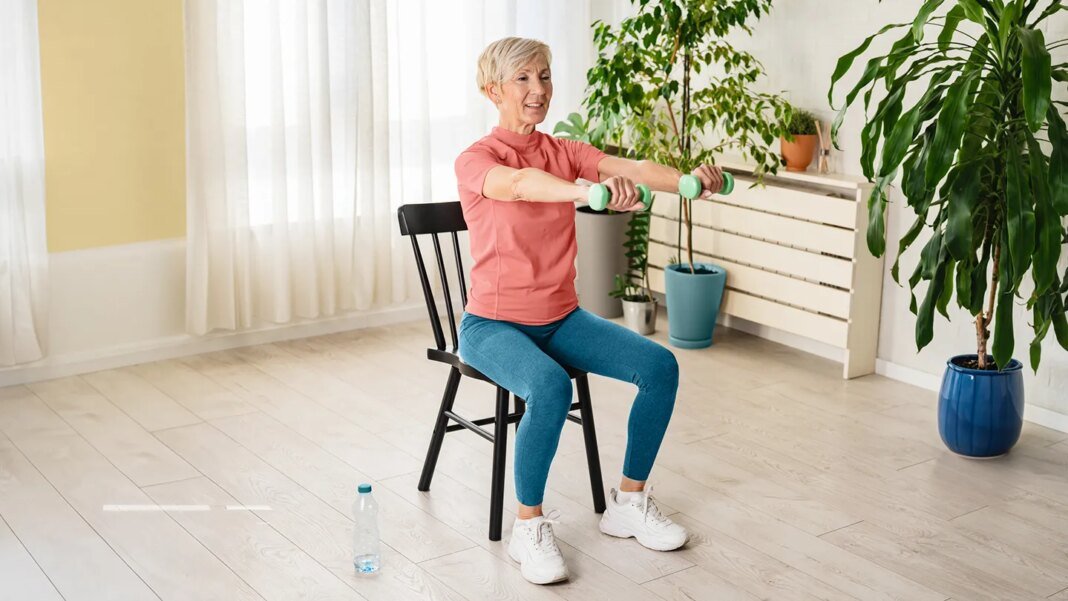

Getting Started With Seated Core Exercises
“Our core is what stabilizes our entire body and connects our upper and lower limbs. Even seated core strength exercises are beneficial,” says Tina Tang, CPT, a personal trainer based in Jersey City, New Jersey, specializing in healthy aging.
Seated core exercises are an excellent alternative for older adults, individuals with mobility or balance difficulties, or those recovering from injury or surgery. For instance, if you’ve just undergone hip replacement surgery, balancing on your feet for extended periods may be uncomfortable.
“While recovering from hip replacement surgery, staying seated during a core workout allows someone to move without putting too much strain on their hip joints,” Tang explains. Seated exercises can effectively strengthen your core muscles and support a smoother recovery.
- Choose a stable chair or bench without wheels or armrests. An exercise box, sometimes referred to as a plyometrics box, can also work if you have one handy.
- Ensure the chair is at an appropriate height, allowing you to sit comfortably with your feet flat on the ground and your knees at a 90-degree angle.
- Wear loose, comfortable clothing that facilitates unrestricted movement.
- Keep a bottle of water nearby to stay hydrated during your workout.
- Gradually build up your activity level over time, and remember to take breaks as needed.
Once you’re comfortable and ready to start working out, aim to complete three sets of 10 repetitions for each exercise in this seated core workout. Tang recommends participating in this routine at least twice a week while working towards training your core three times weekly.
Here’s a simple seated core workout to get you started:
1. Seated Marches
While seated, lift one knee at a time, as if you’re marching. Aim for a controlled movement and engage your core to maintain balance. This exercise will enhance your coordination and activate your abdominal muscles.
2. Seated Torso Twist
With your feet planted firmly on the ground, twist your upper body to one side, then the other. Hold onto the chair for stability if needed. This exercise works wonders for your oblique muscles while providing gentle stretching for your spine.
3. Seated Knee Raises
While sitting tall, lift your knees towards your chest, engaging your core. Hold for a moment before lowering your legs back to the starting position. This move strengthens your lower abs and hip flexors.
4. Seated Side Bends
Place one hand on the side of your chair and stretch the opposite arm overhead. Lean to the side, feeling a stretch along your side. This exercise increases flexibility and targets your obliques.
These exercises can create a solid foundation for your core strength, enhancing your stability and functional movement.
Incorporating seated core exercises into your routine can offer substantial benefits, especially for those with specific fitness needs. Remember to listen to your body, and make adjustments as necessary. Start slowly, focus on form, and gradually increase your intensity as your strength improves.